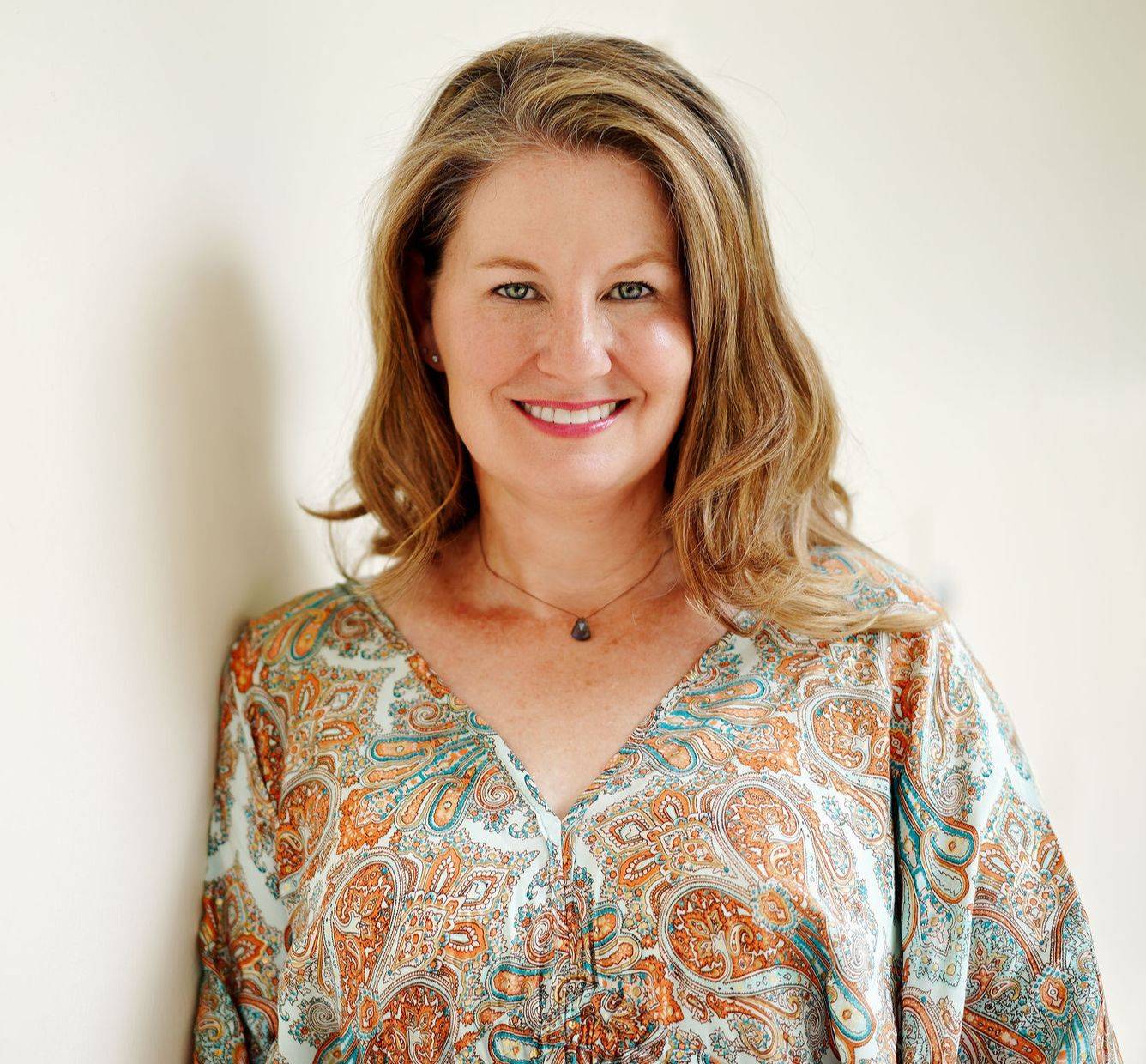
Faith Without Fear: Navigating Scrupulosity with Jaimie Eckert
Episode 4 Faith Without Fear: Navigating Scrupulosity with Jaimie Eckert | OCD Insights Podcast
What if the faith you love is the very thing OCD is using against you? Samantha Bray, LCSW sits down with scrupulosity coach Jaimie Eckert to explore religious OCD (scrupulosity), one of the most painful and least understood subtypes of OCD, and how to heal without choosing between your beliefs and your recovery.
Scrupulosity.com | Work with Samantha | All Episodes
In this deeply moving episode of OCD Insights, Samantha Bray, LCSW sits down with scrupulosity coach Jaimie Eckert to explore one of the most misunderstood and underserved presentations of OCD: religious scrupulosity.
This episode is for anyone who has ever wondered whether a tormenting thought is coming from their own heart, or from their OCD. When the intrusive thought arrives as an accusation or a taboo image, it can feel like proof of who you really are. If that question has ever kept you up at night, this conversation was made for you.
About Jaimie Eckert
Jaimie Eckert is a scrupulosity coach specializing in Religious OCD and the founder of Scrupulosity.com, a global resource for Christians navigating the intersection of faith and obsessive-compulsive disorder. She holds three theology degrees, including a doctorate in missiology (the study of Christian missions), and brings over a decade of ministry experience to her work. Most importantly, Jaimie has walked this road herself: diagnosed with religious OCD during a mental health crisis while serving as a missionary overseas, she understands from the inside what it means to wonder if your intrusive thoughts mean something about your soul. Her approach is Bible-based spiritual coaching that works alongside clinical OCD treatment.
Episode Description
Scrupulosity, also called Religious OCD, is one of the most painful and least understood subtypes of OCD. It hijacks your relationship with God, turning prayer, scripture, confession, and worship into a minefield of compulsions and doubt. And yet, for many people of faith, the idea of seeking therapy can feel like a betrayal of trust in God, and the idea of exposure therapy can feel like being asked to sin.
In this episode, Samantha and Jaimie trace the journey from unconscious incompetence (“I do not have OCD, OCD is for people who wash their hands”) to the breakthrough epiphany of “This is not MY belief, this is OCD.” Along the way they unpack scrupulosity’s most common symptom clusters: blasphemous intrusive thoughts, moralistic obsessions, confession compulsions, evangelism compulsions, thought-action fusion, and “God distortions,” those twisted mental images of a demanding, conditional God that secretly fuel the OCD cycle.
Jaimie shares her own three-part framework for recovery: remove what is hurting you, acclimate to what is hurting you, and ignore what is hurting you until it passes. A surprisingly simple roadmap that honors both psychological evidence and faith. She also addresses the very real harm caused by religiously insensitive ERP, the danger of spiritual bypassing, and why some Christians would rather stay miserable with OCD than do therapy that feels like sin.
This is a conversation full of grace, courage, and hard-won insight for those in the grip of religious OCD, for their loved ones, for Christians in leadership roles, and for any clinician seeking to serve this population with wisdom and sensitivity.
In This Episode, You’ll Discover
-
What scrupulosity really is, and why it is described as a mental health disorder that hijacks your relationship with God
-
The four stages of OCD awareness (from unconscious incompetence to conscious competence) and why the breakthrough moment can feel like a miracle
-
How “God distortions,” skewed mental images of a demanding, conditional God, secretly feed the OCD cycle
-
Why intrusive thoughts about God, Jesus, or sacred figures do not say anything about who you really are or what you truly believe
-
Jaimie’s three-part recovery framework and how each maps to a different clinical or spiritual tool
-
How ERP (Exposure and Response Prevention) can be done in a way that is both effective and respectful of your faith values, and what harmful ERP looks like
-
The difference between a thought passing through your mind and a thought that is truly “you,” and why thought-action fusion in a religious context is especially cruel
-
How OCD repurposes scripture (like 2 Corinthians 10 on “taking thoughts captive”) to justify ritualizing, and what those passages actually mean in context
-
Why courage, not perfection, is the single biggest predictor of recovery from religious OCD
-
Words of hope for those who have walked away from faith because of scrupulosity
Questions We Explore
-
What is scrupulosity, and how is it different from genuine religious conviction or spiritual sensitivity?
-
What are blasphemous intrusive thoughts, and why do they tend to target the things a person holds most sacred?
-
How does thought-action fusion work in a religious context, and what does the Bible actually say about it?
-
What makes ERP harmful for people of faith, and what does respectful, values-aligned exposure treatment look like?
-
How do “God distortions” form, and how can you gently begin to separate your true image of God from the one OCD has constructed?
-
Is scrupulosity spiritual warfare, and when does that framing help or hurt recovery?
-
What happens when someone turns away from their faith entirely because of scrupulosity, and is there a way back?
-
What role do faith leaders play in supporting someone with religious OCD, and what do they need to understand first?
- What is the most important thing someone in the grip of religious OCD needs to hear right now?
Timestamps
00:00 Introduction and Technical Issues
04:19 Understanding Scrupulosity and OCD
09:17 The Challenge of Recognizing OCD
14:41 Spiritual Warfare and Mental Health
22:18 Thought-Action Fusion in Scrupulosity
29:02 Ego Dystonic and Ego Syntonic Thoughts and Thought Action Fusion
35:23 Understanding Scrupulosity and Its Impact
49:35 Gentleness in Therapy and Overcoming Shame
55:58 The Complexities of ERP in Religious Contexts
01:01:59 Understanding Religious OCD and ERP
01:06:47 Navigating Therapy and Client-Therapist Dynamics
01:14:17 Group Coaching and Community Support
01:19:07 Overcoming Stigma in Therapy
01:30:27 The Power of Courage in Healing
01:31:24 Sharing Your OCD Journey
Scripture References
The following passages were discussed in the episode, included here for listeners who want to revisit the context.
-
2 Corinthians 10:3-5: “Taking every thought captive,” reexamined through an OCD lens
-
Philippians 4:8: meditating on what is true, noble, just, and lovely (goal vs. process)
-
Romans 12:1-2: renewing the mind, the ongoing, imperfect process of transformation
-
Hosea 14:4: “I will heal their backsliding, I will love them freely,” hope for those who have walked away
-
2 Timothy 1:7: God has not given us a spirit of fear, but of power, love, and a sound mind
-
Philippians 1:6: “He who began a good work in you will be faithful to complete it,” you are a work in progress
-
Matthew 5 (Sermon on the Mount): on lust and intentionality, reframed against thought-action fusion
-
Genesis 2:7: a holistic view of the person, formed of dust and given the breath of life
Therapeutic Techniques Discussed
-
Exposure and Response Prevention (ERP): the gold-standard OCD treatment, discussed in depth, including how religiously sensitive, consensual exposures help and how insensitive ones can drive shame and dropout.
-
Acceptance and Commitment Therapy (ACT): orienting toward your values and taking valued action alongside anxiety, rather than waiting for the fear to disappear.
-
Cognitive defusion and thought-action fusion: separating a passing thought from intention and identity, using the ego-syntonic vs ego-dystonic distinction and the “bumper sticker” test.
-
Response prevention and reassurance reduction: recognizing reassurance-seeking as parasitic and resisting the compulsive loop it feeds.
Connect With Jaimie Eckert
Website: scrupulosity.com
YouTube: @jaimieeckert
Facebook: Jaimie Eckert on Facebook
Group coaching, masterclass, and peer forum: scrupulosity.com
Connect With OCD Insights
Website: ocdinsights.com
Apple Podcasts: Listen on Apple Podcasts
Spotify: Listen on Spotify
YouTube: @OCDInsights
Substack: ocdinsights.substack.com
Instagram: @ocdinsights
Facebook: OCD Insights on Facebook
LinkedIn: Samantha Bray, LCSW
Work with Samantha: ocdinsights.com/workwithme
Share Your OCD Story
There are two ways to take part in OCD Insights. You can apply to be a guest and share your OCD journey, the messy, real, human parts of it, because your story could be exactly what someone else needs to feel less alone and find hope. Or you can send in a question to be answered on the show, either written or recorded as a short voice memo. Apply to be a guest or submit your question at ocdinsights.com/asksam (voice memos can also be emailed to [email protected]).
Disclaimer: This podcast is for informational and educational purposes only and is not a substitute for therapy, clinical diagnosis, or professional mental health treatment. If you are struggling, please seek support from a qualified mental health professional.
Samantha Bray (00:00) If you've ever been tormented by thoughts, images, or urges that feel blasphemous and sinful and target your faith or morality, you're going to want to hear this episode. Today we're talking about scrupulosity, also called religious OCD. I'm Samantha Bray, and this is OCD Insights. My guest today is Jamie Eckert. Jamie is a scrupulosity coach. She holds three theology degrees, including a doctorate. What makes Jamie so special is that she does not just study this work, she has lived it. After a serious mental health episode while on a mission, she was diagnosed with religious OCD herself, and she's spent years since helping people untangle their faith from their fear. So if your mind has ever handed you a thought so disturbing that you wondered what it said about you. Take a breath, you're not broken, and you're not alone. Let's welcome Jamie Eckert. Samantha Bray, LCSW (01:29) Hi, Jamie, it's so good to meet you. Thank you for agreeing to be on OCD Insights. I really appreciate your time. I have a lot of notes here. I wanted to start by, you have three, is that right? Three theology degrees, including a doctorate. my gosh, you've dedicated your work to something I think most seminaries don't even teach. Jaimie Eckert (01:36) Yeah, thank you so much. It's a topic I enjoy discussing. Yes. Samantha Bray, LCSW (01:55) And I'm wondering, how did you first come to specialize in scrupulosity? And if you don't mind, could you tell a little bit about your path? Jaimie Eckert (02:03) Yeah, absolutely. I had, I never had an intention of ever doing this. Actually, I went to college initially to become a Bible teacher. So I double majored in education and biblical studies. Went as a missionary with my husband overseas, I was teaching at a mission school. They said, we'll take another degree, you'll be you'll be even better of a teacher if you can do more. So I took a second degree. They gave me a scholarship for third for my doctorate, which is actually in missiology, which is the study of Christian missions, has nothing to do with scrupulosity at all. You know, I was very much into the mission sphere and sharing the gospel in, you know, multicultural contexts. But it was in that context as Samantha Bray, LCSW (02:34) Okay. Okay. Yeah. Thank you. Jaimie Eckert (02:46) an overseas missionary that I had a mental health breakdown. And that I had been struggling personally with depression and anxiety since I was a teenager. Never had an OCD diagnosis before because Samantha Bray, LCSW (02:49) That's right. Jaimie Eckert (02:57) as I'm sure we'll talk about in this podcast, scrupulosity is not the atypical presentation of what people think of when it comes to OCD. So it never even came across my radar, but it was in that breakdown when I flew back to the United States and had to do some time inpatient and was diagnosed with religious OCD. Went back to join my husband where we lived overseas and I did not really have. Samantha Bray, LCSW (03:11) I'm going to Jaimie Eckert (03:24) I didn't have the best access to care. I was in a developing country and there were not really a lot of therapists around, definitely nobody who understood OCD or scrupulosity. So during that time, I had been treated for my depression and I was doing really good on that front. But as far as the OCD, I actually spent a lot of time in Facebook support groups. And I was just soaking up and learning from other people, what is this scrupulosity stuff all about? What do I do with this? How do I treat my OCD? Samantha Bray, LCSW (03:44) Wow. Jaimie Eckert (03:52) And so I learned a lot from other people, just peer support. And as I was Samantha Bray, LCSW (03:57) Wow. Jaimie Eckert (03:58) learning from them, the educator in me was like, you know, you will learn things so much better when you teach it to other people. So I intentionally was like spending time then trying to support others in the forums that were struggling. And by and by they started tagging me and they started direct messaging me and asking me for advice. And Samantha Bray, LCSW (04:05) Mm-hmm. Jaimie Eckert (04:19) I was sort of at a point where my own OCD was stabilizing. And so I didn't have enough time to really help as many people as were reaching out to me unless I kind of made that more of a thing in my life. So it was in, I think, 2019 when I quit my work that I'd been doing with refugees and humanitarian stuff. And I became a scrupulosity coach. Samantha Bray, LCSW (04:40) Wow. Man, there's a lot there to unpack. I'm so curious. wow, that must have been a big life decision to decide to quit your job to become a scrupulosity coach. That's amazing. Man. Jaimie Eckert (04:43) Yes. Samantha Bray, LCSW (04:54) Did you say that during your treatment for depression when you flew back to the States, that's where you were diagnosed? Was that the first time you had come to see that it was OCD? Okay. Jaimie Eckert (05:05) Okay, so actually how I figured out it was OCD is a crazy part of the story too. And I don't know if this will resonate with any of your listeners. But I was like, before I went, was it, yeah, it was before I flew back. I was, I had a few times seen a telehealth therapist a few times and she had, she knew I was dealing with depression. And so she started me on CBT basic. Samantha Bray, LCSW (05:22) Mm. Jaimie Eckert (05:28) cognitive behavioral therapy, you know, if you have this bad thought, you argue with it and replace it with the correct thought. And she was just gushing about how wonderful CBT is. And I think CBT is probably an umbrella term that can mean a lot of different things. I don't know if I'm even repeating it correctly, but she says, this is a Samantha Bray, LCSW (05:34) Mm-hmm. Right. Jaimie Eckert (05:45) great modality. I prescribe it for everybody, except people who have OCD because it can backfire on them. And it was just, conversation and we kept going because I mean, I don't have OCD. I never thought about OCD. OCD is for people who wash their hands a lot, right? People who check the lock on the door. I don't do that. I have a, you know, I have a clean house, but it's not perfectly clean. So it didn't even cross my mind twice until I was fastidiously doing all of the mental argumentation with myself and I was getting worse. Samantha Bray, LCSW (06:16) Yeah. Yeah. Yeah. Yeah. Jaimie Eckert (06:16) I was watching myself become more neurotic every day as I would sit there and I would have a bad thought that I would argue with that thought and try to get it out and be like, you know, trying to fix my thoughts. And you're nodding and smiling because you know what was happening in my brain. I was getting worse from that mental ritualized arguing. And it was at that moment, it was the first time that her comment popped back in my mind. I was like, she did say this can backfire on people with OCD. Google. Samantha Bray, LCSW (06:35) Yeah. Yeah. Jaimie Eckert (06:45) What is OCD? And that was when I first started seeing myself in some of those symptom lists. And then I came across this idea that there is such a thing as religious OCD. And so when I flew back, I did two things. I went to a, Samantha Bray, LCSW (07:05) Yes. Jaimie Eckert (07:00) stayed at a facility that specializes in like a holistic depression recovery program. And I mean, thank God it was, I mean, it was the best thing I've ever done in my life. In 10 days, my depression was completely cured. Samantha Bray, LCSW (07:30) Wow. That must have been amazing. I mean, 10 days sounds like a miracle, right? But I would guess you also had some foundational support going into that. Jaimie Eckert (07:40) Yeah, absolutely. And I also had a very good psychiatrist. I was on a very good medication regimen. I think that a lot of times we compartmentalize mental health into like, it's therapy or it's medicine, but really they work best together. And the psychiatrist I had was very skilled. So I think it was a combination of things. And after I came out, I then attended an OCD intensive for two weeks where I worked with OCD specialists who understood religious OCD and scrupulosity and that changed the trajectory of my life. Samantha Bray, LCSW (08:17) Yeah, yes. I think that's such an important thing to say because we really do compartmentalize. And often people will try therapy without medication or medication without therapy. And honestly, I think they work really beautifully together, especially for OCD. So tell me about your experience at the two week intensive. What was that like? Jaimie Eckert (08:36) Oh, it was life changing. Like literally, I say that not hyperbolically. I think that that two week period was the most important time of my mental health recovery. The intensive that I attended was specifically focused on religious OCD. So every single day we had group therapy, we had individual therapy, we had psychoeducation. And the psychoeducation component was really the place where I first learned, oh, scrupulosity is actually a manifestation of OCD. And it's not just me being a bad Christian or not trying hard enough. That's the lie that the OCD tells you is that, you know, you need to try harder, pray harder, read the Bible more, get your thoughts right. When in reality, scrupulosity is a manifestation of OCD, it's not a spiritual problem, it's a mental health problem that shows up in the spiritual domain of your life. Samantha Bray, LCSW (09:31) Yes. And I love that distinction because I think so many people with scrupulosity are getting advice from their religious leaders, right? People that they trust spiritually to help them figure this out. And their religious leaders are giving them advice that, while well-intentioned, is actually making the OCD worse because they don't understand OCD. Jaimie Eckert (09:55) Yes. Absolutely. I think that's one of the things that makes scrupulosity particularly difficult to spot and treat. The OCD is disguised as a spiritual problem. And so people will go to their pastors or their spiritual directors or their priests and they'll say, you know, I'm having these terrible thoughts about God or about, you know, my prayers not being correct or me doing something blasphemous, and the spiritual leader will say, well, you know, you need to pray more or you need to read the Bible more or you need to think positive thoughts about God. And what that does is it puts the person in a compulsion loop. The thought comes up and then they try to do something to manage that thought and to make it go away. And that's the exact opposite of what we want to do in OCD treatment. Samantha Bray, LCSW (10:39) Yes. Exactly. So scrupulosity is the OCD, and the religious content is just the theme, right? The theme that the OCD latches onto. So can you explain to our audience what scrupulosity is? And maybe some of the common themes that you see in your clients? Jaimie Eckert (11:03) Yeah, so scrupulosity is religious OCD. It's obsessive compulsive disorder that manifests in the spiritual or religious domain of a person's life. So it could be manifesting as intrusive thoughts about God or about your faith. It could be showing up as compulsive prayer or rituals. It could be showing up as avoidance of religious settings or materials. There are a few primary themes that I see in scrupulosity. The first is what I would call a concern with blasphemy or disrespect towards God. So that would be thoughts like, what if I'm disrespecting God? What if I'm blaspheming? What if I offended God? And that can show up as intrusive images or words or phrases that feel really offensive. The second primary theme is a concern with sin. So the thought might be, what if I committed a sin? What if I did something wrong? What if I'm not saved? What if I'm going to hell? And some people get really stuck on what I call scrupulosity of the past, where they're ruminating over things they did years and years ago that they think might have been sinful and they're trying to determine if they're still going to be forgiven. Samantha Bray, LCSW (12:05) Right. Jaimie Eckert (12:11) The third primary theme is a concern with moral purity and perfectionism. So this might show up as thoughts like, am I pure enough to pray? Am I pure enough to go to church? Have I done enough good deeds? Is my faith strong enough? And that feeds into a lot of perfectionism around spiritual practices. And then the fourth theme is what I would call scrupulosity of intention. So this is about worrying about whether your motives are pure. So someone might be doing a good deed and then they start worrying, well, what if I'm doing this for the wrong reason? What if my motives aren't pure? What if I'm being selfish? And so they might redo the action or ruminate about it trying to make sure their motives were okay. Samantha Bray, LCSW (12:50) Those are such good themes. And I think what's important is that these are themes, right? So the OCD machinery, as we call it, can apply these themes to any content. So once someone recognizes those themes, they can start to say, oh, that's the OCD, that's the machinery, rather than getting lost in the content. So let's say someone's experiencing religious OCD or scrupulosity and they're starting to notice patterns. What would you say to them? Like, what's the first step they should take? Jaimie Eckert (13:24) I would say the first step is to get an accurate diagnosis. I think that so much of the suffering that people with scrupulosity experience is because they don't even know they have OCD. They think they're a bad person. They think they're doing something wrong spiritually. They think they're not trying hard enough. And so if you can get an accurate diagnosis from someone who understands OCD and understands scrupulosity specifically, that can be really helpful. And then I would say the next step is to get into evidence based treatment. And the gold standard for OCD is exposure and response prevention. And what that means is you're gradually exposing yourself to the thoughts or the feelings that are causing you distress without engaging in compulsions to try to make them go away. And that's really the antidote to the compulsion loop. Samantha Bray, LCSW (14:08) Yeah, exactly. And I think exposure and response prevention is so crucial for OCD. And for scrupulosity specifically, I think it's even more important because so much of the compulsions in scrupulosity are mental compulsions. So people are doing a lot of rumination, a lot of analyzing, a lot of thought replacement. Can you talk a bit about mental compulsions and how they show up in scrupulosity? Jaimie Eckert (14:36) Absolutely. Mental compulsions are actually the hardest compulsions to address because they're invisible. Nobody can see you doing them. So when you're ruminating about whether a thought was sinful or whether you did something blasphemous or whether your motives were pure, other people don't know that you're doing that. But your brain knows. And your brain is being rewarded for that compulsion. And so the compulsion gets stronger and stronger. Some specific mental compulsions that I see in scrupulosity are things like analyzing. So you're analyzing whether a thought was actually sinful. Rumination, trying to figure out, well, what does this thought mean about me? Does this mean I'm a bad person? Does this mean I'm not a true Christian? Thought replacement, where you're trying to replace the thought with a positive thought. Prayer as a compulsion, which is different from prayer as a spiritual practice. When prayer becomes, I need to say this prayer five times to make sure I did it right, or I need to say this prayer to counteract the bad thought that I had, that becomes a compulsion. And reassurance seeking, where you're asking your pastor or your spiritual director or your friends, is this sin? Am I a bad person? And you're looking for reassurance that you're okay. Samantha Bray, LCSW (15:50) Right. And reassurance seeking is so, so tricky because it feels like it's helping in the moment. It temporarily reduces anxiety. But then the anxiety comes right back because you're reinforcing the cycle. Jaimie Eckert (16:05) Right. Yes. And that's one of the hardest things for people to understand is that even though reassurance feels like it's helping, it's actually making the OCD worse in the long run. And the antidote to that is learning how to sit with the uncertainty. And that's really hard. But that's what healing looks like. Samantha Bray, LCSW (16:25) Yeah. So let me ask you about something. You had mentioned earlier that the intensive was two weeks. And I'm wondering if people can find that kind of intensive OCD treatment for scrupulosity. Are there specific places that specialize in religious OCD? Jaimie Eckert (16:43) Yeah, so there are a few places that specialize in religious OCD treatment. The International OCD Foundation has a provider directory where you can search for therapists who specialize in OCD. And then there are also some specific intensives. The one I went to is Rogers Memorial Hospital, which has a specific program for religious OCD. They also have a program for moral scrupulosity. And there are other places like the OCD and Anxiety Center in Austin. There are a number of places that have programs. And I think it's important to note that if you don't have access to an intensive, you can still get really effective treatment from a therapist who specializes in OCD and understands scrupulosity. It doesn't have to be an intensive. The intensive was incredibly helpful for me, but I think anybody who works with a competent therapist who understands OCD can make real progress. Samantha Bray, LCSW (17:36) That's such an important thing to say because I think a lot of people think, well, I can't afford an intensive or I can't get to one, so I'm just going to suffer. But really, finding a good therapist who specializes in OCD is a game changer. Jaimie Eckert (17:53) Absolutely. And I think that that's one thing that I'm really passionate about is making treatment accessible because I know that having access to specialized care changed my life. And I want other people to have that access. So that's why I have my coaching program and my master class and my YouTube channel. I'm trying to make the information more accessible to people who might not have the resources to go to an intensive or even to have regular one-on-one therapy with a specialist. Samantha Bray, LCSW (18:15) That's wonderful. So you have your coaching program. Can you tell me what else you're offering? I know you mentioned your YouTube channel and your master class. What other resources do you have for people? Jaimie Eckert (18:27) Yeah, so I have a YouTube channel where I put out weekly videos on scrupulosity and religious OCD. I have a master class that goes deep into the theory and the practices of scrupulosity recovery. I have my website, scrupulosity.com where you can find all of my resources. I also have a book. It's called Breaking Free from Scrupulosity and I think it's a comprehensive guide to understanding and treating religious OCD. And it's designed for both people who have scrupulosity and also for the helpers around them, therapists, spiritual directors, pastors, family members. And then I have my group coaching program that I mentioned earlier. Samantha Bray, LCSW (19:05) That's amazing. So you have a book too. That's so awesome. So what is the book, Breaking Free from Scrupulosity, what are some of the main ideas in there? Jaimie Eckert (19:16) Yeah, so the book goes through the different aspects of scrupulosity. It defines what scrupulosity is, it talks about the different themes, it talks about how to get an accurate diagnosis, it talks about evidence based treatment. And then it also has a lot of practical tools and strategies for managing scrupulosity. Things like how to manage intrusive thoughts, how to reduce compulsions, how to work with your spiritual director or your pastor or your therapist. And then towards the end of the book, I have chapters for helpers, for family members and friends and spiritual leaders and therapists who are trying to support someone with scrupulosity. Because I think it's important that the helpers understand what the person is going through so that they can be supportive rather than accidentally making things worse. Samantha Bray, LCSW (20:06) That's so smart. I really respect that because, you know, the family members and the spiritual leaders, they're often on the front lines and if they don't understand OCD, they can inadvertently reinforce the compulsions. So having that resource for them is so valuable. So I want to ask you about the spiritual piece of this because I think this is where it gets tricky. How do you help someone distinguish between when they're dealing with a genuine spiritual struggle and when they're dealing with scrupulosity? Jaimie Eckert (20:36) Yeah, that's a really good question. And I think it is tricky because both can exist simultaneously. Someone could be having a genuine spiritual struggle and also have scrupulosity. I think the key difference is the level of distress and the degree to which it's interfering with their ability to live their life. Like, a genuine spiritual struggle might be, I'm questioning some of my beliefs or I'm trying to figure out what I actually believe. That's a normal part of spiritual development. But if you're having intrusive thoughts that are causing you extreme distress and you're spending hours trying to manage them, if you're avoiding church or prayer or reading the Bible because it's too anxiety provoking, then that's scrupulosity. I think another way to tell is to look at the function of the thought. Like, is the thought pointing you toward growth and connection? Or is it pointing you toward avoidance and isolation? Scrupulosity is characterized by obsessions followed by compulsions. The thought creates anxiety and then you do something to try to reduce that anxiety. And that cycle just feeds the disorder. Samantha Bray, LCSW (21:38) That's such a good distinction. So it's really about looking at the function and the impact. Is it creating connection and growth or is it creating isolation and suffering? So one more thing I want to ask you about, and this is something I haven't talked about much on the podcast, is what happens when someone has scrupulosity and it overlaps with another theme of OCD. Like, can you have scrupulosity and also have harm OCD? Or can it overlap with other themes? Jaimie Eckert (22:07) Absolutely. I see this pretty commonly actually. Someone could have both scrupulosity and harm OCD. So they might be worried, what if I had a blasphemous thought about harming God or the church or a religious figure? Or they could have scrupulosity and contamination OCD. So they might be worried about being contaminated with sin. Or they could have scrupulosity and moral OCD, where they're worried about having done something morally wrong. And when these themes overlap, it can make the disorder even more complex and confusing. So I think it's really important to work with a specialist who can help untangle all of these themes and understand what's going on underneath. Samantha Bray, LCSW (22:46) Yeah, that makes total sense. And I think one of the beautiful things about understanding the OCD machinery is that it doesn't really matter what the specific theme is. The treatment remains the same. You're using exposure and response prevention regardless of whether it's scrupulosity or harm OCD or any other theme. The mechanics are the same. Jaimie Eckert (23:06) Exactly. The mechanism of OCD is the same across all of the different themes and presentations. It's obsession, anxiety, compulsion, temporary relief, and then the obsession comes back. And so by understanding that cycle and then by working to break that cycle through exposure and response prevention, you can address whatever theme is showing up for you. Samantha Bray, LCSW (23:30) Right. And I want to point out that in exposure and response prevention, the response prevention part is really critical. So you're not just exposing yourself to the thought. You're also deliberately choosing not to do the compulsions. And that's where a lot of the real healing happens. Jaimie Eckert (23:49) Yes. Because if you expose yourself to the thought but you don't stop the compulsion, then you're not really breaking the cycle. You're just doing the compulsion in a different way. So it's really important to both expose yourself to the distressing thought or situation and to resist the urge to do the compulsion. Samantha Bray, LCSW (24:07) Right. And I want to talk about acceptance and commitment therapy because I think this is another really valuable approach for people with scrupulosity. Can you talk about how you integrate ACT into your treatment work? Jaimie Eckert (24:26) Yeah, so ACT is really helpful for people with OCD because it teaches them to have a different relationship to their thoughts. Rather than trying to get rid of the thoughts or to make them go away, ACT helps you to accept the presence of the thought and to continue living your life in alignment with your values despite the presence of the thought. And for people with scrupulosity, this is really important because it means that you're not trying to think perfect thoughts or to get your faith perfectly right. You're just accepting the thoughts that come and continuing to live out your faith and your values despite the thoughts. So for example, someone might have a blasphemous thought and instead of trying to get rid of the thought or to analyze it, they would just notice it and be like, okay, there's that thought again. And then they would continue doing their spiritual practice or whatever they're doing because that's in alignment with their values. And the thought can come along for the ride. Samantha Bray, LCSW (25:22) I love that. And I think that's such a powerful framework for people with scrupulosity because it really does reframe the whole thing. Instead of trying to achieve perfect thoughts or perfect faith, you're just continuing to live in alignment with your values. So I want to ask you, as people are listening to this, if they think they might have scrupulosity, what are some of the signs or red flags that they should watch for? Jaimie Eckert (25:49) Yeah, so some of the red flags would be that you're having intrusive thoughts about God or your faith that are distressing. You're spending a lot of time ruminating about whether you've sinned or whether you've blasphemed. You're doing compulsions like prayer or analysis or seeking reassurance in order to manage your anxiety. You're avoiding religious settings or religious materials because they trigger your anxiety. You're experiencing a lot of shame around your thoughts. You feel like you're not a good Christian or a good person because of these thoughts. You might have a history of anxiety or depression or other OCD presentations. And then the big red flag is that despite your efforts to manage these thoughts through spiritual practices or through talking to your spiritual leaders, the anxiety is not getting better. It's actually getting worse. Samantha Bray, LCSW (26:43) Yeah, that last one is so important. If you're doing everything you think you should be doing spiritually and the anxiety is still there or getting worse, that's a real sign that you might need professional help for OCD rather than more spiritual guidance. Jaimie Eckert (27:02) Absolutely. And I think that's one of the biggest tragedies of scrupulosity is that people spend years trying to manage it through spiritual practices, not knowing that what they need is professional mental health care. Samantha Bray, LCSW (27:16) Yeah. So let's talk about people who might be resistant to getting help. What would you say to someone who's dealing with scrupulosity but who is hesitant to go to a therapist or who is worried that therapy might somehow compromise their faith? Jaimie Eckert (27:35) Yeah, that's a really common concern. And I think it's understandable because if you're dealing with religious OCD, it makes sense that you would be worried about whether getting help would somehow undermine your faith. But I would say that scrupulosity is not about faith. It's about fear. It's about anxiety and fear that's latched onto faith. And so getting treatment is not about compromising your faith. It's about freeing yourself from the fear so that you can actually practice your faith more fully. One of the things I often tell people is that if your faith is strong enough to cause you this much distress, it's strong enough to survive therapy. And I think that's true. I think that getting treatment for OCD is actually a way of deepening your faith because you're freeing yourself from the fear and the anxiety that's been hijacking your faith. Samantha Bray, LCSW (28:24) That's so beautiful. And I think it's true. I think faith is resilient. And actually, I would argue that having OCD is often a sign of a deep faith because the person with scrupulosity is so committed to their faith, they're so committed to being good and being right and doing the right thing that the OCD latches onto that. It's like the OCD is exploiting their strengths, right? Their deepest values. Jaimie Eckert (28:48) That's a really beautiful way to frame it. Yeah, I think you're right. The OCD does exploit people's strengths and their values. And that's one of the things that makes scrupulosity so painful is that it's targeting the thing that people care about most. And so if you can get treatment and you can free yourself from the OCD, what you're left with is even a deeper and more authentic connection to your faith because it's not being contaminated by the fear and the anxiety. Samantha Bray, LCSW (29:15) Right. So I want to ask you about one more thing. Earlier, I was thinking about the intersection of social anxiety OCD and scrupulosity. Like, what if someone is worried about what other people think of them religiously or morally? Can that show up in scrupulosity? Jaimie Eckert (29:35) Yeah, absolutely. I think that's actually pretty common. Someone might be worried, what if people think I'm not a real Christian? What if people think I'm a hypocrite? What if people think I'm immoral? And then they might try to do things to manage those fears, like trying to hide their struggles from other people or trying to present themselves as more perfect or more pious than they actually are. And I think that can create a lot of isolation because people are so focused on what others think that they're not able to be authentic or vulnerable or ask for help. Samantha Bray, LCSW (30:10) Yeah, exactly. And I think that's where the shame piece comes in too. People feel so ashamed of their intrusive thoughts that they're not able to talk about it to anybody. Jaimie Eckert (30:21) Yes. And that shame is so corrosive. And I think that's one of the reasons why support groups and coaching communities are so important because it helps people to realize that they're not alone. They're not the only one who's experiencing these thoughts. And there's so much freedom in realizing that other people are dealing with the same thing. Samantha Bray, LCSW (30:41) Absolutely. And it's beautiful because shame loves secrecy and it dies in the light of connection. So when you can be part of a community where people are openly talking about their scrupulosity, that shame starts to lose its power. Jaimie Eckert (31:00) Exactly. And that's why I built my program to include a forum for peer support because I know how powerful that is. Samantha Bray, LCSW (31:09) So let me ask you one final question about scrupulosity. Are there any kind of myths or misconceptions that you feel like you're constantly having to debunk when you're working with people with scrupulosity? Jaimie Eckert (31:24) Oh gosh, yeah. One of the biggest misconceptions is that scrupulosity is a sign of weak faith. I think people assume, well, if I'm having all these doubts about my faith or if I'm having all these blasphemous thoughts, it means that my faith isn't strong enough. But actually, as we talked about, scrupulosity often shows up in people with very deep faith. Another misconception is that the solution is just to pray more or to read the Bible more or to try harder spiritually. But actually, that's often what's feeding the disorder. The solution is not more spirituality, it's professional treatment for OCD. And then another misconception that I often see is that if you have scrupulosity, you'll always have it. But that's not true. People get better from scrupulosity all the time. With proper treatment, with access to evidence based care, with exposure and response prevention, people can heal and they can go on to live full, authentic lives where they're not ruled by fear and anxiety. Samantha Bray, LCSW (32:23) That's so hopeful. And I think that's such an important message. So as we're wrapping up, I want to ask you about something. I often tell people, and I think I heard this from an expert, that the biggest predictor of healing from OCD is not doing therapy perfectly. And I'm wondering if you've noticed that in your work with people with scrupulosity. What do you think is the biggest predictor of healing from OCD? Jaimie Eckert (32:51) I often will remind people that this is my personal opinion, purely my opinion. I have no longitudinal studies to back this up. But my opinion here is that the biggest predictor for healing from OCD is courage. I see that the people that have courage and they say, I think I can, I think I can, I think I can, just like the little engine that could in the children's book, right? I think I can do this. By the grace of God, I can do this. And they put their mind and their back into it. These are the people that I see getting better, the people who bring courage to the table. So don't be discouraged. Keep trying. Yeah. Samantha Bray, LCSW (01:24:20) And like that. And courage and doesn't doesn't mean doing the therapy perfectly. Or anything in my world, it means going towards the things you value, and that, you know, bear the fruit and, and are loving, despite the anxiety alongside, you have to wait for it to go away. You don't have to wait, stop your entire life and try to work on this one thing. The more that you continue to go out and do the things that you love to do and be with the people and community that you love while the OCD is working its way out, that's courageous. That's so courageous. Jaimie Eckert (01:24:41) Right. Samantha Bray, LCSW (01:24:44) I think I remember the question. It's just maybe a topic for another visit, but when people totally turn away from religion because they're dealing with scrupulosity and they abandon it 100%. Do you have any words of wisdom for them if they happen to stumble upon this podcast? Jaimie Eckert (01:25:22) Yeah, that's a very sensitive question for two reasons. First of all, the people who experience that, I think, live with a burden of shame and possibly regret because they are turning away from something that, at their core, the OCD attacks what we value most. So it means it was something valuable to them. At the same time, I think it's a very sensitive question because many of the people who do have an active case of scrupulosity are very terrified of what you just mentioned. Samantha Bray, LCSW (01:25:53) Okay. Yes. Yes. Yeah. Jaimie Eckert (01:25:51) They're afraid that they will do that. That, and especially because, so I see that there tends to be like a pendulum swing in scrupulosity. I know, I'm doing everything my mind tells me to, and then they swing into the avoidance because it becomes too painful for them. And it's specifically people who are in that avoidance stage where they're like, I can't go to church, I can't read my Bible, I can't pray, this is just all too much, it's making me so anxious. And especially if they start feeling like negative or angry thoughts towards God, they'll think what if I what if I am going to deconvert or walk away from my faith and that can become a whole nother sort of spiral of fears of things that might happen to them. I would say in in the people that I've worked with, I haven't seen that happening. I know that that demographic does exist. But at least the people I've worked with, I can only think of really maybe one person out of a few hundred that I've worked with that was you know, expressive of saying like I'm just done. I can't do this anymore and so yeah, that does become quite a topic of anxiety for people for Christians with OCD but even if a person has come to a place where they're no longer practicing doesn't mean that God's not still waiting for them. Doesn't mean that God doesn't still love them. And one of my favorite passages in the Bible is in Hosea chapter 14 verse four, where God is talking to the nation of Israel when they've backslid and they've walked away from him. They're burning incense to these idols and doing like basically everything God told them not to do, sacrificing their children in the fire and just terrible atrocities. Hosea 14 verse four, he says, I will heal their backsliding. I will love them freely. My anger is turned away from them. And it's an invitation, the whole chapter is this invitation to come back. God's not mad at you. Come back and experience that relationship that he intended for you to have. And I think that it doesn't really matter at what point we are in, you know, thinking about walking away or walking away. We can always turn around and come back. Samantha Bray, LCSW (01:27:49) it's beautiful. Really beautiful. Do you ever encourage people to read the Serenity Prayer? Jaimie Eckert (01:27:56) This is a very nice one. I can't say that I have memorized it or mentioned it. I'm familiar. It's a very nice one. Samantha Bray, LCSW (01:28:00) All right, right, right. Yes, just to have the discernment to know what you can control and what you cannot. This is such a control disorder. Well, I'm curious, how does someone come and sign up for your group? Is it open enrollment or do you have a... Jaimie Eckert (01:28:16) Right. Samantha Bray, LCSW (01:28:25) certain periods of time. Jaimie Eckert (01:28:16) Yeah, so my website is scrupulosity.com and you can sign up there for the group coaching set. I have like a membership package where I have the master class that I filmed and I just refilmed it. It's almost done being edited and it's going to be uploaded soon. And I'm really excited because I added a whole lot more stuff in the 2.0 version of my master class. So you'll access to around eight or 10 hours of content of like, you know, here's some core principles for scrupulosity recovery. And then we have every Sunday evening and Wednesday afternoon, we have group coaching sessions on zoom. There's also a forum for peer support. I mentioned earlier that peer support forums were very instrumental in my own recovery. And so I wanted to reproduce that on my website as well. I usually am doing some limited amount of private coaching. But I am actually this month starting maternity leave as I've shared with you. So I'm putting that on hold for a little while as we welcome our second baby. But yeah, hopefully by summer of this year, 2026, I'll be back to private coaching as well. Samantha Bray, LCSW (01:29:31) So you'll still be doing the groups. Okay, that's so wonderful. Thank you for offering that. I think I'll take your master class because I'm sure they have lots of nuggets in there I could still learn. That's really awesome. Jaimie Eckert (01:29:34) I will be continuing the group sessions throughout. Awesome. Samantha Bray, LCSW (01:29:47) Okay, so, and you have a YouTube channel, that's amazing. I just want to throw that out there. Oh, I think it's great. There's a lot of little nuggets, bite-sized pieces of information that I think people could find very, very, I'm sure they find it very helpful. Yeah. I really appreciate you being a guest. Is there anything I didn't ask that you think I should have asked you? Jaimie Eckert (01:29:51) Working on it. I think you've really covered the ground quite well. I agree. I think we could talk for three, four hours. But thank you so much for the privilege of inviting me on your podcast. I really appreciate that. Samantha Bray, LCSW (01:30:09) You Oh, my pleasure. And yeah, I look forward to visiting with you again soon. I really do. Take care, Jamie. Jaimie Eckert (01:30:24) Thank you Samantha, thank you so much. Samantha Bray (01:30:27) Thanks again, Jamie, for a great conversation. If you take one thing from today, I hope it's this. A tormenting thought is not a verdict and it's not truth. And as Jamie reminded us, the single biggest predictor of healing is not doing therapy perfectly. It is courage, that quiet, repeated choice to keep moving toward the life and the faith you love, even while the anxiety rides along beside you. And if today's conversation stirred something in you, here's my one invitation. I would love to hear about your OCD journey. Your experience could be exactly what helps someone else feel less alone. And you can apply to share it on the show. And if you have a question you would like answered, you can send that in too, in writing or as a short voice memo, all at ocdinsights.com slash ask Sam. And please like and subscribe. This helps more people find their way here. Take good care. Until next time.Read Full Transcript
© OCD Insights™
Most People Don't Recognize OCD Because It Doesn't Look Like OCD.
You're Not Alone and You're Not Broken.
From contamination fears to relationship doubt, harm obsessions to religious guilt- OCD shows up in ways most people never expect. This free guide breaks down every major theme so you can finally put a name to what your mind has been doing.