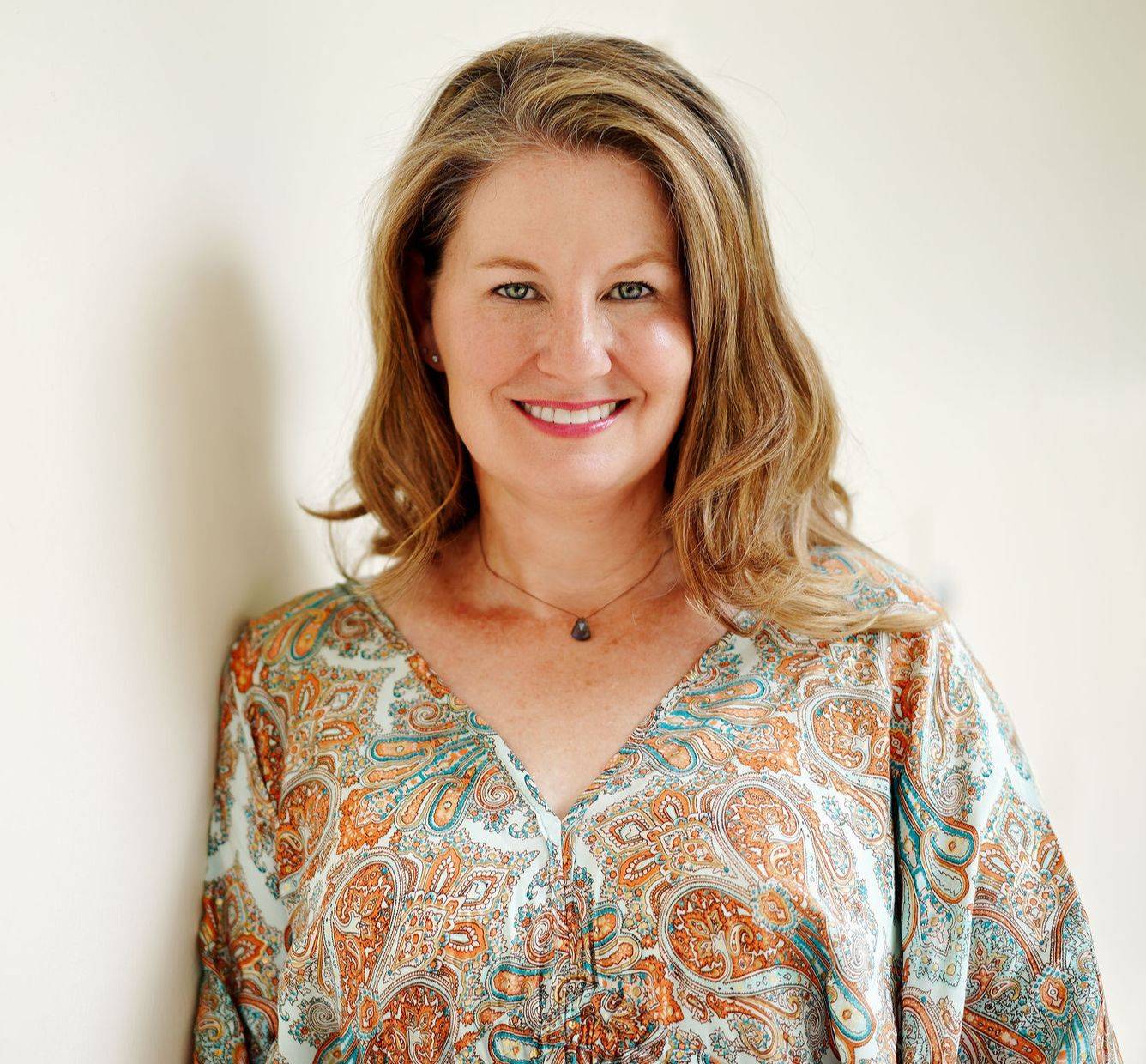
From Stuck to Unstuck: Creating a Life Alongside Anxiety
Ep 1: From Stuck to Unstuck- Creating a Life Alongside Anxiety | OCD Insights Podcast
What if courage doesn’t feel like bravery but like fear and trust at the same time?
In this powerful inaugural episode of OCD Insights, Samantha Bray sits down with Rexx- meditation instructor, and creator of The Unstuck Journal to explore what it really takes to build a meaningful life alongside anxiety and OCD.
Work with Samantha | All Episodes
Rexx shares her journey from believing she had schizophrenia after experiencing her first intrusive thought, to years of misdiagnosis, to finally finding relief through Exposure and Response Prevention (ERP). This conversation goes beyond symptom management. It’s about taking imperfect action, living by your values, and refusing to wait for anxiety to disappear before fully living.
From solo travel abroad to building a business alongside OCD, Rexx embodies value-based courage. If you’ve ever felt stuck waiting for your anxiety to go away before living your life, this episode will remind you that you don’t have to wait.
Highlights:
-
The difference between OCD and general anxiety
-
What intrusive thoughts actually feel like
-
Why courage often feels like fear in the moment
-
How anxiety makes your world small and values make it bigger
-
The difference between journaling as growth vs. journaling as compulsion
-
Why manifestation culture can unintentionally worsen OCD
-
The shift from eliminating anxiety to living alongside it
-
How baby steps build confidence over time
Questions Explored:
-
How do you know if what you're experiencing is OCD versus general anxiety?
-
What does an intrusive thought actually feel like?
-
Why is misdiagnosis so common with OCD?
-
How can you tell if journaling is helping or becoming a compulsion?
-
What’s the difference between taking action to eliminate anxiety vs. taking action despite anxiety?
-
Can manifestation and positive thinking practices be harmful for people with OCD?
-
How do you shift from “I’ll live once anxiety is gone” to “I’ll live alongside anxiety”?
Therapeutic Techniques Discussed:
-
Exposure and Response Prevention (ERP) – Moving toward fear while resisting compulsions
-
Acceptance and Commitment Therapy (ACT) – Living a meaningful life alongside anxiety
-
Mindfulness Practices – Observing thoughts without judgment rather than trying to control them
Get The Unstuck Journal:
https://www.theunstuckjournal.com
MUSIC CREDIT:
Music by Kevin Sherman at www.Kevinstunes.com
Connect With OCD Insights
Website: ocdinsights.com
Apple Podcasts: Listen on Apple Podcasts
Spotify: Listen on Spotify
YouTube: @OCDInsights
Substack: ocdinsights.substack.com
Instagram: @ocdinsights
Facebook: OCD Insights on Facebook
LinkedIn: Samantha Bray, LCSW
Work with Samantha: ocdinsights.com/workwithme
Share Your OCD Story
There are two ways to take part in OCD Insights. You can apply to be a guest and share your OCD journey, the messy, real, human parts of it, because your story could be exactly what someone else needs to feel less alone and find hope. Or you can send in a question to be answered on the show, either written or recorded as a short voice memo. Apply to be a guest or submit your question at ocdinsights.com/asksam (voice memos can also be emailed to [email protected]).
OCD Insights (00:00) OCD can make your world very small. Are you waiting for it to disappear before you start living? What if that's exactly what's keeping you stuck? Stay tuned because in this episode, we explore how to go from stuck to unstuck and what actually makes your world big again. This is OCD Insights. Samantha Bray (00:46) Hello everyone, welcome to OCD Insights. I'm Samantha Bray, a licensed therapist specializing in OCD and anxiety. I'm so glad you're here. If you have OCD or anxiety, you might be waiting, waiting for the intrusive thoughts to stop, waiting to feel ready, waiting for the anxiety to go away so you can finally start living your life. But what if waiting is actually what's keeping you stuck. Today I'm talking with Rexx creator of the Unstuck Journal, an ERP-based tool for people with OCD and severe anxiety. Also a certified meditation teacher who helps people quiet anxious noise and doubts so they can pursue their values and goals. But Rexx didn't start here. She started in a place where panic attacks and OCD made even basic functioning feel impossible. So how did she get from there to creating a tool that guides others through the same process that transformed her life? That's what we're exploring today because the path from stuck to unstuck isn't what most people think it is. I hope you enjoy. Samantha Bray, LCSW (02:05) Thank you for being here. I really, really appreciate you agreeing to be the first guest on OCD Insights. Rexx (02:13) I'm honored. Thanks for having me. Samantha Bray, LCSW (02:16) So I know we were chatting a bit before I pressed record. That's part of learning on the fly, right? Rexx (02:21) Thank you. Something I would do. Samantha Bray, LCSW (02:29) So I wanna reintroduce your beautiful journal, the Unstuck Journal. Look at this beautiful packaging. You're telling me about how you put so much thought into it. Rexx (02:36) Mm-hmm. Yeah. Samantha Bray, LCSW (02:48) So it's a sustainable product and we're talking about, look at this beautiful color. Rexx (02:56) Yeah, we were talking about the inspiration and like color theory and what comes to mind when I see this color. And for me, I mean, I thought that was an amazing question. I hadn't really given it, I guess, that much thought on a conscious level, but I think subconsciously, it does signal to me like a groundedness and earthiness. Samantha Bray, LCSW (02:57) And your inspiration for the color. Yeah. Rexx (03:23) My intention only was to make sure that it was sort of gender neutral and like it wasn't like leaning towards like more feminine branding or masculine branding. I really wanted to be like, you know, this is a journal for everyone. And so that was like my inspiration. But I also chose a color that I like, which is emerald green. So yeah. Samantha Bray, LCSW (03:48) I love it. And I just want to open it. And it's probably noisy, but it comes in this beautiful packaging so it doesn't get messed up in shipping. I really appreciated all the detail. And then it's nice and compact so you can take it wherever. I bet you gave that a lot of thought too. Rexx (04:00) Yes. I did, and the belly band too, to have some information and context. So that white strip basically around the journal to have some information and context around this being exposure and response prevention journal, because I actually wanted to keep the cover very simple and easy and discreet because I don't want the cover to say OCD inside, you know, all these things. And while you're working, you might want to work in a cafe or something, you know? So I wanted to just be very discreet and simple on the cover, but have that additional information on the belly band so people know what's inside. Samantha Bray, LCSW (04:37) Right. So it's got guided worksheets, step-by-step instructions included. And I love this part, the value exploration prompts, discover and define your core values. I'm really glad to see that you added that. I think that's a piece that can be missing often when folks get ERP therapy. But yeah, it's just, it's beautifully done. And I... Rexx (05:05) Mm-hmm. Yeah. Samantha Bray, LCSW (05:22) Just my jaw dropped when I opened it. I'm just so proud to see that you've done this. It's amazing. So I was curious if you mind sharing what was your inspiration in creating such a beautiful journal for folks. Rexx (05:27) Yeah. Yeah, so my inspiration, I think it was maybe years in the making, unbeknownst to me when I decided to officially do the journal. But I, as you know, I struggled with OCD and I saw you in 2018, I want to say it was. It was a long time ago. Yeah, for OCD. Samantha Bray, LCSW (06:06) Yeah, was before COVID. Rexx (06:11) And at the time it was one of the hardest things I had to go through in my life, for sure. It was very scary and oftentimes it's even just very hard to find qualified OCD therapists. And finding your insurance, I remember I had insurance issues, like there's just all this extra added stress around OCD. And it was just all of that, going through all of that. So I did therapy. Samantha Bray, LCSW (06:44) How many therapists had you seen for OCD by that point? Rexx (06:49) I had seen, so it was actually quite hard to get a diagnosis for OCD. I had known that I had it once I started doing some online research, ironically like chat forums. But some therapists had said I might not have it. So I remember seeing two therapists before I saw you. And they were both kind of like general anxiety or one said I had the fear of a failure perhaps. It was a very interesting diagnosis. I'm not to say I don't have that, but like, it was just kind of like, just wonkiness around that. And once I was finally able to find, thank God I was able to find you and discover ERP. I was finally able to like start making progress with OCD and learning these very like non-intuitive ways of dealing with intrusive thoughts and anxiety. I had been in talk therapy for years prior. So when you ask that question, I almost wanna include like all the talk therapists that I had gone to that also, you know, I kind of went in circles with them. Samantha Bray, LCSW (08:06) Okay. Yeah. Were you talking about OCD themes in talk therapy? Rexx (08:22) So, that one is kind of a hard one for me to answer because I think I was having OCD-like thoughts, but I don't know that they were intrusive thoughts per se. But there was a lot of anxiety around control. So it was around that, in that sphere. And it was for, I was seeing them for anxiety. I was, before the OCD diagnosis, I got a general anxiety diagnosis. So I was being treated for general anxiety. So I was talking to them about my anxiety. There was a lot of talk therapy around general anxiety. So yeah. Samantha Bray, LCSW (09:15) What made you think that you would be dealing with OCD? What was it that made you go to the chat forums? Rexx (09:25) Well, it sort of happened suddenly. There was a lot going on in my life and there was a video that I had watched that was triggering to me. I won't go into details as to not trigger other people, but there was a video that I had watched that was triggering to me. And then all of sudden I started getting this intrusive thought that I couldn't let go of. And it was just constant intrusive thought that was the same thought and it felt a little different than what I had experienced before. The only other time I recall experiencing this was when I was a child and it was around religion and there was a thought after reading the Bible I had gone this thought that I just could not get out of my mind and it was just intrusive and it kept coming and coming. Samantha Bray, LCSW (10:30) Hmm. Rexx (10:31) I was very young, I didn't know what it was. I don't even think I even told my parents about it, but I know that I suffered in my room, you know, with this thought for quite a while. And then it kind of just, I don't know, it just went away. There was no treatment done for that. But I remember one day I just, I didn't think about it as much. And also I became less religious and it was around religion. Samantha Bray, LCSW (10:43) Yeah. Rexx (10:59) So I don't know, maybe the thought was related to my religious beliefs and once I let go of that, then it wasn't as triggering anymore. But yeah, so as an adult and coming across this triggering video, I had this intrusive thought and I couldn't shake it. And unlike the childhood one, it didn't go away. It was just there and it was feeding my anxiety. And I remember going to chat forums on Reddit and OCD support forums online and I was like, okay, this is a constant thought, intrusive thought. What is this? And then I read through all these stories and I was like, oh my gosh, I think I have OCD. Samantha Bray, LCSW (11:48) And you self-diagnosed before you came to see me? Rexx (11:53) Yes, I self-diagnosed. I came to you like, I think I have OCD. And you were like, yep, you do. And I was like, okay, great. It's validating to hear a professional, you know, validate that. And then we worked on ERP and from there my world started to expand again. Samantha Bray, LCSW (12:15) I love that you went out and did your research. And I think that's so important, especially nowadays with the internet. You can go and find information. And I think for a lot of people with OCD, that's the first step to getting the right treatment. So tell me about your experience with ERP. What was that like for you? Rexx (12:36) Yeah, so it was a different approach than anything I had done before. With talk therapy, I was definitely more talking about anxiety and maybe some problem-solving around anxiety. But with ERP, it was more like, okay, we're going to approach your anxiety and intrusive thoughts differently. We're going to lean into them. We're going to expose ourselves to them and we're not going to do the compulsions. So that was very foreign to me at first. And I remember thinking, wait, I thought you were supposed to reduce anxiety, not increase it. That doesn't make sense. But then Samantha explained to me the neurobiology of how anxiety works and how the more you avoid something, the more you feed anxiety. And if you can lean into it without the compulsions, you can actually break that cycle. Samantha Bray, LCSW (13:25) Right. It doesn't come intuitively because our natural instinct is to avoid the thing that's causing us anxiety. So when we say lean in, what does that mean? Can you describe what that actually looked like for you? Rexx (13:40) Yeah, so for me it meant that when the intrusive thought came up, instead of trying to push it away or ignore it or distract myself from it, which is what I had been doing, I would actually sit with it. I would just acknowledge, okay, there's this thought. And instead of going into a spiral of analysis or rumination or trying to fix the thought, I would just observe it. It's like, okay, there's that thought again. And then I would continue on with my day. And the more I did that, the less power the thought had over me. Samantha Bray, LCSW (14:17) And that's such a beautiful way to describe acceptance. And I think for people listening who might be thinking, well, that sounds really hard. It is. It's counterintuitive. Our brains are wired to avoid things that feel uncomfortable. But what you're describing is literally rewiring your brain so that the thought loses its grip. And over time, the anxiety naturally decreases without you having to do anything to make it go away. Rexx (14:44) Absolutely. And I think what I realized through that process is that courage often just feels like fear and trust combined. Like, I was scared, but I trusted the process. And I trusted Samantha. And I trusted that even though it felt scary and uncomfortable, that it was going to be okay. And that courage wasn't about not being scared. It was about moving forward despite the fear. Samantha Bray, LCSW (15:13) That's such a powerful reframe. Courage is not the absence of fear, it's moving forward despite the fear. And I think that's what people don't understand about the ERP process. It's not about eliminating anxiety. It's about learning to live a full life while the anxiety is there. So after you got through the ERP process and you started to feel better, what came next? How did the Unstuck Journal come about? Rexx (15:41) Yeah, so as I was going through the recovery process, I was thinking about how powerful this work was and how I wished I had had some kind of tool or guide to help me through it. And I was thinking about all the other people out there who are struggling with OCD and anxiety and who might not have access to a specialized therapist like you. And so I decided to create the Unstuck Journal as a way to share the tools that had helped me get unstuck. And I wanted it to be accessible, affordable, and beautiful because I think when you're going through mental health challenges, having something that's beautiful and well-made can be really empowering. Samantha Bray, LCSW (16:24) I love that. And I think the accessibility piece is so important because, as you mentioned, there aren't enough specialized OCD therapists. And even when there are, they can be expensive. So having a tool like this that people can work through on their own time is really valuable. Can you walk us through what's in the journal? Rexx (16:45) Yeah, so the journal has several components. First, there's an introduction that explains what OCD is and what ERP is, so people understand the framework. Then there are guided worksheets that walk you through the process of identifying your triggers, your anxiety responses, and your compulsions. And then there are step-by-step instructions on how to do ERP on your own. And then, like you mentioned, there are value exploration prompts because I think connecting with your values is such an important part of this process. It's not just about reducing anxiety. It's about building a life that's worth living. Samantha Bray, LCSW (17:31) Yeah, and the values piece is what makes this journal different from other resources out there. Because a lot of times when people are going through ERP, they're so focused on reducing anxiety that they forget about what they're working towards. They forget about their values. So what you've done is you've integrated that into the journal. Can you talk about what values are and why they're so important in OCD recovery? Rexx (17:59) Yeah, well, I think values, I define them as very broadly, as something that's important to you that informs your actions. So, you know, it's important to me to feel connected. So I use that, the need to feel connected to inform my actions. So I plan, I make time for friends. I make time for social events. Even if sometimes I might not want to do it, my values are not changing on an hourly basis. It's like, they do change over time. And I think values can change. But like, sometimes I act towards my values even if in that moment, I'm not feeling like it. So like, I'm a little tired. But you know what? It's important to me to stay connected with my friends. So because that's important to me, I will go to this event. I will go hang out with my friends, something like that. Samantha Bray, LCSW (18:45) Hmm. Yeah. And then you also provided a values list just to get people jump started where you list just things like adventure, altruism, balance, belonging, career. There's a bunch of them here, but whichever ones resonate to you at the time in your life. Like you said, they change because we change developmentally and our life changes. You know, what you value as a child versus a college student versus a young adult versus an older person, elderly, retired person, you know, our worlds are looking different and we have different things that are most important to us as we grow. Some things don't change, but I'm sure a lot does over the lifespan. But yeah, I love, I love that you offered that list in here for folks that are like, what exactly are values? Rexx (19:34) Yeah. The things you want to grow in your life, you want present. Samantha Bray, LCSW (19:47) Yeah, the things that as we were talking about earlier that expand your life, that can allow you to like make that room feel bigger and just like, you know, brings joy to your life, allows you what's important to you, you know. Rexx (20:01) Mm-hmm. Yeah. Samantha Bray, LCSW (20:05) So I wanna pivot a little bit and talk about your life now. Because you went from dealing with OCD and anxiety to creating this beautiful tool and becoming a certified meditation teacher. Can you tell us about your meditation practice and how that's helped you? Rexx (20:27) Yeah, so meditation has been such a powerful tool for me. I started meditating during my recovery from OCD and it really helped me build awareness and develop that ability to observe my thoughts without judgment. And I fell in love with meditation so much that I decided to get certified as a meditation teacher. And through that practice, I've learned so much about the mind and how to work with anxiety and fear in a more skillful way. Samantha Bray, LCSW (20:56) That's beautiful. And I think meditation and ERP actually complement each other really well. They both involve this awareness and this non-judgment of your thoughts and experiences. So tell me about your ideal day. What does that look like for you now? Rexx (21:16) My ideal day, I think it involves some kind of creative expression or movement. So I've been dancing ballet for a while now and I really enjoy that. It's something that quiets my mind in a way that nothing else does. I also think an ideal day involves some kind of learning or reading. I love to learn new things. And then definitely social connection, that's huge for me. Being with friends, being with community. And then time in nature. Being outside. And I think those are the things that really expand my life and make me feel alive. Samantha Bray, LCSW (21:52) I love that. And it sounds like you've really integrated your values into your life. Can you talk a bit about how you balance all of that? Because it can sound like a lot. Rexx (22:09) Yeah, so I think what I've learned is that it doesn't have to be perfect. Like, some days I do all of those things and some days I do just a couple of them. And that's okay. What's important is that I'm making space for the things that are important to me. And I think the other thing I've learned is that I don't have to feel perfect or good to do these things. Like, I might be having an anxious day, but I can still go out and see friends. I can still go take a ballet class. I can still read or spend time in nature. And that's actually what helps me feel better. Because I'm acting from my values even when I'm not feeling great. Samantha Bray, LCSW (22:50) That's such a powerful message. You don't have to wait for anxiety to go away to start living your life. And in fact, the more you live your life and pursue your values, the more anxiety naturally decreases. So let me ask you about ballet specifically because you mentioned that you really love it. And I'm curious about what draws you to ballet. Rexx (23:13) Yeah, so I think what draws me to ballet is that it's very technical and requires a lot of focus and discipline. And for me, that's actually really soothing because when I'm dancing, my mind is completely focused on the choreography and the movements. And there's no room for anxiety or worrying about other things. I tell my friends about it and they're like, well ballet just doesn't seem very like free flowing or like, and there are other dances that are more free flowing that I might try, but I just, there's something about how technical ballet is that I really like because I really get to focus my brain and it becomes meditative for me because it's hard to think about anything else. When you have to think about a million things when doing ballet. So in that way, it allows my mind to rest, whereas I imagine for someone else, it would not be very restful for them. But for me, it is. Yeah. So I really enjoy that. And being connected with friends. I am learning more the importance of connection, I think with anxiety and my background with anxiety and depression, there is this isolation that happens sometimes where I can feel like I need to isolate until I figure out, you know, I'm working through a mental problem. Go in my corner and like tinker with this issue or mental challenge, just tinker with it, fix it, the fix it thing. I need to fix this and I can get in some ways I can kind of get like hyper focused on that and not make space for the social. And so since I moved to New York, I've been more focused on social and getting out there. So I think an ideal day will always have to include some sort of social connection in it and it would just be very, very simple. That would be my idea. Samantha Bray, LCSW (24:55) I love that. And yeah, it's brimming with all your values, I can tell. Rexx (24:59) Yeah, yes, exactly. These are my values are throughout the whole thing and trying to make space for my values, the art movement, the connection, learning, feel like I'm always going to be a lifelong learner. Like to learn new things. So reading, nature, being outside. Yeah, all of that. Samantha Bray, LCSW (25:28) We didn't really define what values are. Do you have a definition, a go-to definition? Rexx (25:36) Yeah, well, I think values, I define them as very broadly, as something that's important to you that informs your actions. So, you know, it's important to me to feel connected. So I use that, the need to feel connected to inform, that informs my actions forward. So, I plan, I make time for friends. I make time for social events. Even if sometimes I might not want to do it, it's not like, you know, my values are not changing on an hourly basis. It's like, they, my values, they do change. And I think values can change. But like, sometimes I act towards my values even if in that moment, I'm not feeling like it. So like, I'm a little tired. But you know what? It's important to me to stay connected with my friends. So because that's important to me, I will go to this event. I will go hang out with my friends, something like that. Samantha Bray, LCSW (26:28) Hmm. Yeah. And then you also provided a values list just to go to get people jump started where you list just things like adventure, altruism, balance, belonging, career. I there's a bunch of them here, but whichever ones resonate to you at the time in your life. Like you said, they change because we change developmentally and our life changes. You know, what you value as a child versus a college student versus a young adult versus an older person, elderly, retired person, you know, our worlds are looking different and we have different things that are most important to us as we grow. Some things don't change, but I'm sure a lot does over the lifespan. But yeah, I love, I love that you offered that list in here for folks that are like, what exactly are values? Rexx (27:20) Yeah. Samantha Bray, LCSW (27:22) the things you want to grow in your life, you want present. Rexx (27:24) Mm-hmm. Yeah. Yeah, the things that as we were talking about earlier that expand your life, that can allow you to like make that room feel bigger and just like, you know, brings joy to your life, allows you what's important to you, you know. Samantha Bray, LCSW (27:34) Mm-hmm. I really hope that that's a great, see it like a on the choppy waters, you know, towards the lighthouse to get your direction back, you know. I really appreciate you meeting with me. This has been such a joy to with you again. Where can people purchase this? Off the website? Rexx (27:52) Yeah. Yeah. Mm-hmm. Mm-hmm. Of course. Thank you. Yes, so you can purchase it off the website. I'm looking to maybe start selling on Amazon, but that's going to be a longer process. As of right now, you can purchase it off of the website, the unstuckjournal.com or on TikTok. If you're on TikTok, it's also at the unstuck journal on TikTok. And yeah, and Amazon to be determined. Samantha Bray, LCSW (28:25) Okay. Rexx (28:29) but that's where you can purchase it now. Samantha Bray, LCSW (28:32) And if someone wanted to write you a message or get in contact with you, how would we do that? Rexx (28:38) You can hello at the unstuck journal.com. Samantha Bray, LCSW (28:43) Okay cool. Very nice to see you. I cannot tell you. You are an inspiration to me with all the things that when you contacted me about this journal you were writing I was I've been sitting on a podcast for a couple years. What is my excuse? Rexx (28:47) Yeah stop. No, I'm so glad you're doing it and I can't wait to listen to all the amazing people that you have coming on this podcast. I'm so excited. I really look forward. Thanks. Samantha Bray, LCSW (29:15) You're one of those amazing people, Rexx. OCD Insights (29:18) What a conversation. So many powerful insights. Such a great time to get to see her again and speak with her. From that moment of terror when she thought she had schizophrenia to learning that courage often just feels like fear and trust combined. I loved when she talked about how anxiety makes your world small, but living by your values can make it big again. That image of anxiety sitting in the corner of a large room instead of cramping you into a tiny space, that's the shift we're all working towards. And her reminder that the journal won't make your anxiety go away, that is honest. That's real because this work isn't about eliminating anxiety, it's about learning to live a full meaningful, vibrant life alongside it. I'd love for you to subscribe to OCD Insights wherever you listen to podcasts. Each episode, we're exploring what it really takes to move from stuck to unstuck, from small to expansive. You can find the show notes, links to the Unstuck Journal, and all the resources we may have mentioned today at OCDInsights.com. That's also where you can connect with me if you'd like to learn more about the work I do. I'm going to leave you with a beautiful song by my dear friend, Kevin Sherman. He is a singer-songwriter located here in Ashland, Oregon. Let it wash over you. If you're wearing headphones, crank it up. And as you go about your day, maybe reflect on the words. You can find more of Kevin's music at kevinstunes.com. Thank you for being here. Thank you for doing this brave work and showing up for yourself. Until next time.Read Full Transcript
© OCD Insights™
Most People Don't Recognize OCD Because It Doesn't Look Like OCD.
You're Not Alone and You're Not Broken.
From contamination fears to relationship doubt, harm obsessions to religious guilt- OCD shows up in ways most people never expect. This free guide breaks down every major theme so you can finally put a name to what your mind has been doing.