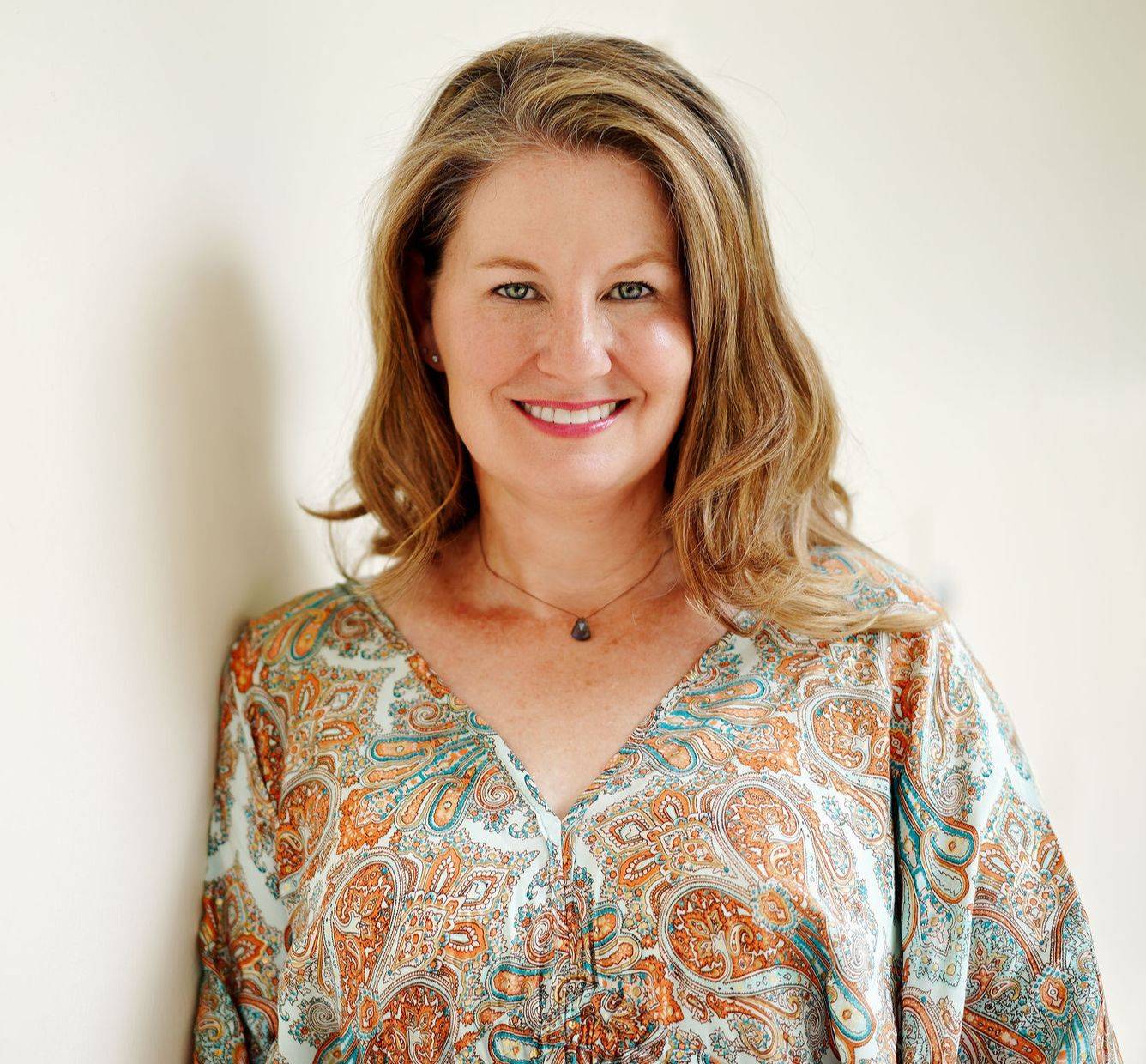
Every Day, I'm Brave: Renee Zukin On Doing The Hard Thing Even When You Are Afraid
Episode 7 | OCD Insights
How A Late OCD Diagnosis Became The Start Of A Life She Loves
Everyone tells you to trust your gut. But what do you do when your gut is the loudest part of the alarm, and your brain has been telling you lies for twenty years?
Renee Zukin spent decades being told her fear was something else. Depression. Anxiety. Postpartum. It was not until the intrusive thoughts latched onto her food, and she stopped eating, that anyone said the word OCD out loud. In this episode of OCD Insights, Samantha Bray, LCSW sits down with Renee to talk about what a late diagnosis actually changes, why "look at the evidence" is not the same as bargaining with OCD, and how she got back on an airplane after twenty years on the ground.
Every Day, I'm Brave | Work with Samantha | All Episodes
About Renee Zukin
Renee Zukin is an author, educator, and coach with more than 20 years of experience in education, writing, and entrepreneurship combined. A passionate advocate for mental health and conscious living, she blends her training in psychology, energy work, and writing as tools for self-transformation and empowerment. Her mission: to inspire radical bravery, compassion, and connection. Renee earned her Bachelor of Arts in Language and Literature from the University of Michigan and her Master of Arts in Teaching from the University of Iowa. Her self-help memoir detailing her experience with anxiety and obsessive compulsive disorder, Every Day, I'm Brave: Cultivating Resilience to Gain Freedom from Fear, was released August 8, 2025 by Wonderwell Press.
Episode Description
The average person with OCD waits fourteen to seventeen years for an accurate diagnosis. Renee waited into her thirties. She had been treated for depression and anxiety, and when she began losing weight rapidly because she was afraid of her food, the first guess was an eating disorder. It took a nutritionist noticing the shape of her reasoning, and a doctor who listened, before anyone landed on OCD.
What Renee describes next is the part that rarely gets told: getting the right diagnosis is not the end of the story. She started exposure work, found the steps too steep, got angry, and quit. She came back a year or so later, and her therapist did something worth noticing, he reflected on his own pacing and rebuilt the hierarchy smaller. The micro steps let the part of her that rebels feel safe enough to work.
The conversation moves into the questions Samantha's clients ask constantly. How do you trust your gut when anxiety lives in your gut? Where is the line between looking at real evidence and bargaining with OCD? Why is your capacity for brave things different on a Tuesday than it was on a Monday, and what do you do about the shame that shows up when it is? Samantha names the inference-based CBT idea underneath much of it, that doubt arrives with a story attached, and that the story going right is exactly as real as the story going wrong.
It closes on the line that gives the episode its spine. The benefits outweigh the risks. Not the fear is gone. Not I feel ready. Just, what is waiting on the other side matters more to me than the discomfort of getting there.
In This Episode, You'll Discover
- Why OCD is so often missed for years, and what finally makes the internal experience visible to other people
- How food-related intrusive thoughts get misread as an eating disorder, and what tells them apart
- The difference between looking at evidence and bargaining with OCD, drawn in a real example
- What to do when exposures are pitched too high, and why a therapist rebuilding the hierarchy is a good sign, not a failure
- How to think about capacity, why the same task is harder some days, and how to drop the shame that follows
- The inference-based CBT idea that doubt always arrives with a story attached, and that you can tell a different one
- Practical regulation tools that are not exposures: longer exhales, music, and bare feet in the grass
- How Renee got back on a plane after twenty years, and why she still cries at takeoff and goes anyway
Questions We Explore
- How does OCD slip through the cracks for fourteen to seventeen years on average?
- What actually changes when you finally get the right diagnosis in adulthood?
- How do you trust your gut when anxiety is exactly what you feel in your gut?
- When is looking at evidence a skill, and when is it a compulsion?
- Why is my capacity to face fear different from one day to the next?
- How do you tell the people close to you that you are struggling, without slipping into reassurance-seeking?
- Do you have to feel healed before you are allowed to help someone else?
Timestamps
- 00:00 Cold open: when your brain is telling you lies
- 00:43 Intro: Renee Zukin and Every Day, I'm Brave
- 02:44 Diagnosed in her thirties after years of missed signs
- 04:27 When the thoughts latched onto food
- 05:44 The misdiagnosis and the doctor who listened
- 08:46 Resistance, quitting therapy, and micro steps back in
- 12:46 "Trust your gut" when your gut is the alarm
- 16:58 Discernment versus bargaining with OCD
- 21:30 Capacity: why some days are braver than others
- 26:16 The stories doubt tells
- 29:27 The toolbox: breath, music, and bare feet in the grass
- 36:04 The benefits outweigh the risks: getting back on a plane
- 44:23 Her mother's question that changed everything
- 51:16 Isolation, shame, and asking for help
- 57:32 Not healed, still practicing
- 01:01:36 Outro
Books Referenced
- Every Day, I'm Brave: Cultivating Resilience to Gain Freedom from Fear by Renee Zukin (Wonderwell Press) - everydayimbrave.com
- Navigating the Clickety-Clack: How to Live a Peace-filled Life in a Seemingly Toxic World (Beyond Belief Publishing), to which Renee was a contributing author
Therapeutic Techniques Discussed
- Exposure and Response Prevention (ERP): Renee's exposure work with her therapist, including the moment the hierarchy was rebuilt into smaller steps so she could stay in the work.
- Inference-Based Cognitive Behavioral Therapy (I-CBT): Samantha names the obsessional sequence, how doubt arrives carrying a story, and how the story of it going right is as valid as the story of it going wrong.
- Acceptance and willingness: Renee's word for it is surrender, the point where you stop fighting and let what happens happen.
- Nervous system regulation: longer exhales than inhales to slow the heart rate, music, and time in nature as everyday buffers rather than formal exposures.
- Somatic awareness: getting quiet enough to notice what the body is actually saying, starting with small decisions before trusting it with large ones.
- Self-compassion: meeting yourself at your actual capacity on a given day instead of yesterday's.
Resources Mentioned
- Women Rocking Business, where Renee coaches - womenrockingbusiness.com
- "Some Days Are Better Than Others" by U2, the song Samantha references with clients
Connect With Renee Zukin
- Book: everydayimbrave.com
- Website: reneezukin.com
- Instagram: instagram.com/reneezukin
- LinkedIn: linkedin.com/in/rzukin
- Facebook: facebook.com/zukin1
- Facebook group: Every Day, I'm Brave
- Coaching: facebook.com/ZPSCoaching
- TikTok: tiktok.com/@reneezukin
Connect With OCD Insights
- Website: ocdinsights.com
- Listen on Apple Podcasts: Apple Podcasts
- Listen on Spotify: Spotify
- YouTube: youtube.com/@OCDInsights
- Substack: ocdinsights.substack.com
- Instagram: instagram.com/ocdinsights
- Facebook: facebook.com/OCDInsights
- LinkedIn: linkedin.com/in/samanthabraylcsw
- Work with Samantha: ocdinsights.com/workwithme
Share Your OCD Story
There are two ways to take part in OCD Insights. You can apply to be a guest and share your OCD journey, the messy, real, human parts of it, because your story could be exactly what someone else needs to feel less alone and find hope. Or you can send in a question to be answered on the show, either written or recorded as a short voice memo. Apply to be a guest or submit your question at ocdinsights.com/asksam (voice memos can also be emailed to [email protected]).
Want To Go Further?
If something in this episode landed, leave me the word PATH. Comment it on YouTube, reply with it on Substack or Spotify, or email it to [email protected]. I will write back myself. Tell me a little about what is going on in your world, whatever you are comfortable sharing, and we will look at what might actually help.
Renee Zukin | Author & Mentor (00:00) Samantha Bray, LCSW (00:24) Samantha Bray (00:43) Samantha Bray, LCSW (01:26) Renee Zukin | Author & Mentor (01:27) Samantha Bray, LCSW (01:28) Renee Zukin | Author & Mentor (01:32) Samantha Bray, LCSW (01:35) Renee Zukin | Author & Mentor (01:37) Samantha Bray, LCSW (01:39) Renee Zukin | Author & Mentor (01:46) Samantha Bray, LCSW (01:48) Renee Zukin | Author & Mentor (02:00) Samantha Bray, LCSW (02:00) Renee Zukin | Author & Mentor (02:03) Samantha Bray, LCSW (02:07) Renee Zukin | Author & Mentor (02:25) Samantha Bray, LCSW (02:42) Renee Zukin | Author & Mentor (03:00) Samantha Bray, LCSW (03:02) Renee Zukin | Author & Mentor (03:09) Samantha Bray, LCSW (03:18) Renee Zukin | Author & Mentor (03:18) Samantha Bray, LCSW (03:31) Renee Zukin | Author & Mentor (03:32) Samantha Bray, LCSW (03:39) Renee Zukin | Author & Mentor (03:39) Samantha Bray, LCSW (04:07) Renee Zukin | Author & Mentor (04:07) Samantha Bray, LCSW (04:36) Renee Zukin | Author & Mentor (04:36) Samantha Bray, LCSW (04:51) Renee Zukin | Author & Mentor (04:51) Samantha Bray, LCSW (05:06) Renee Zukin | Author & Mentor (05:07) Samantha Bray, LCSW (05:19) Renee Zukin | Author & Mentor (05:26) Samantha Bray, LCSW (05:32) Renee Zukin | Author & Mentor (05:33) Samantha Bray, LCSW (05:42) Renee Zukin | Author & Mentor (05:44) Samantha Bray, LCSW (06:08) Renee Zukin | Author & Mentor (06:11) Samantha Bray, LCSW (06:32) Renee Zukin | Author & Mentor (06:35) Samantha Bray, LCSW (07:35) Renee Zukin | Author & Mentor (07:37) Samantha Bray, LCSW (07:44) Renee Zukin | Author & Mentor (07:46) Samantha Bray, LCSW (08:10) Renee Zukin | Author & Mentor (08:10) Samantha Bray, LCSW (08:20) Renee Zukin | Author & Mentor (08:23) Samantha Bray, LCSW (08:24) Renee Zukin | Author & Mentor (08:53) Samantha Bray, LCSW (08:53) Renee Zukin | Author & Mentor (08:56) Samantha Bray, LCSW (09:35) Renee Zukin | Author & Mentor (09:35) Samantha Bray, LCSW (10:19) Renee Zukin | Author & Mentor (10:20) Samantha Bray, LCSW (10:22) Renee Zukin | Author & Mentor (10:58) Samantha Bray, LCSW (11:53) Renee Zukin | Author & Mentor (11:55) Samantha Bray, LCSW (12:08) Renee Zukin | Author & Mentor (12:11) Samantha Bray, LCSW (12:11) Renee Zukin | Author & Mentor (12:35) Samantha Bray, LCSW (12:36) Renee Zukin | Author & Mentor (12:38) Samantha Bray, LCSW (12:38) Renee Zukin | Author & Mentor (12:45) Samantha Bray, LCSW (12:46) Renee Zukin | Author & Mentor (13:16) Samantha Bray, LCSW (13:17) Renee Zukin | Author & Mentor (13:17) Samantha Bray, LCSW (13:19) Renee Zukin | Author & Mentor (13:27) Samantha Bray, LCSW (14:55) Renee Zukin | Author & Mentor (14:57) Samantha Bray, LCSW (15:00) Renee Zukin | Author & Mentor (15:02) Samantha Bray, LCSW (15:18) Renee Zukin | Author & Mentor (15:20) Samantha Bray, LCSW (15:29) Renee Zukin | Author & Mentor (15:31) Samantha Bray, LCSW (16:32) Renee Zukin | Author & Mentor (16:32) Samantha Bray, LCSW (16:47) Renee Zukin | Author & Mentor (16:48) Samantha Bray, LCSW (16:50) Renee Zukin | Author & Mentor (16:56) Samantha Bray, LCSW (16:57) Renee Zukin | Author & Mentor (17:13) Samantha Bray, LCSW (17:14) Renee Zukin | Author & Mentor (17:20) Samantha Bray, LCSW (17:20) Renee Zukin | Author & Mentor (17:26) Samantha Bray, LCSW (18:07) Renee Zukin | Author & Mentor (18:08) Samantha Bray, LCSW (18:29) Renee Zukin | Author & Mentor (18:29) Samantha Bray, LCSW (18:35) Renee Zukin | Author & Mentor (18:40) Samantha Bray, LCSW (19:44) Renee Zukin | Author & Mentor (19:51) Samantha Bray, LCSW (19:52) Renee Zukin | Author & Mentor (20:35) Samantha Bray, LCSW (20:52) Renee Zukin | Author & Mentor (20:52) Samantha Bray, LCSW (21:10) Renee Zukin | Author & Mentor (21:13) Samantha Bray, LCSW (21:22) Renee Zukin | Author & Mentor (21:23) Samantha Bray, LCSW (21:42) Renee Zukin | Author & Mentor (21:43) Samantha Bray, LCSW (21:54) Renee Zukin | Author & Mentor (21:54) Samantha Bray, LCSW (22:05) Renee Zukin | Author & Mentor (22:14) Samantha Bray, LCSW (22:32) Renee Zukin | Author & Mentor (22:40) Samantha Bray, LCSW (23:31) Renee Zukin | Author & Mentor (23:32) Samantha Bray, LCSW (23:59) Renee Zukin | Author & Mentor (24:00) Samantha Bray, LCSW (24:03) Renee Zukin | Author & Mentor (24:04) Samantha Bray, LCSW (24:05) Renee Zukin | Author & Mentor (24:19) Samantha Bray, LCSW (24:21) Renee Zukin | Author & Mentor (24:21) Samantha Bray, LCSW (24:34) Renee Zukin | Author & Mentor (24:55) Samantha Bray, LCSW (24:56) Renee Zukin | Author & Mentor (24:59) Samantha Bray, LCSW (25:01) Renee Zukin | Author & Mentor (25:07) Samantha Bray, LCSW (25:07) Renee Zukin | Author & Mentor (25:14) Samantha Bray, LCSW (25:20) Renee Zukin | Author & Mentor (25:24) Samantha Bray, LCSW (25:24) Renee Zukin | Author & Mentor (25:48) Samantha Bray, LCSW (25:51) Renee Zukin | Author & Mentor (25:54) Samantha Bray, LCSW (26:14) Renee Zukin | Author & Mentor (26:16) Samantha Bray, LCSW (26:16) Renee Zukin | Author & Mentor (26:24) Samantha Bray, LCSW (26:27) Renee Zukin | Author & Mentor (26:34) Samantha Bray, LCSW (26:35) Renee Zukin | Author & Mentor (26:44) Samantha Bray, LCSW (26:46) Renee Zukin | Author & Mentor (27:01) Samantha Bray, LCSW (27:02) Renee Zukin | Author & Mentor (27:18) Samantha Bray, LCSW (27:19) Renee Zukin | Author & Mentor (27:19) Samantha Bray, LCSW (27:31) Renee Zukin | Author & Mentor (27:39) Samantha Bray, LCSW (27:41) Renee Zukin | Author & Mentor (27:50) Samantha Bray, LCSW (27:50) Renee Zukin | Author & Mentor (28:01) Samantha Bray, LCSW (28:02) Renee Zukin | Author & Mentor (28:06) Samantha Bray, LCSW (28:12) Renee Zukin | Author & Mentor (28:13) Samantha Bray, LCSW (28:16) Renee Zukin | Author & Mentor (28:18) Samantha Bray, LCSW (28:23) Renee Zukin | Author & Mentor (28:28) Samantha Bray, LCSW (28:33) Renee Zukin | Author & Mentor (28:48) Samantha Bray, LCSW (29:01) Renee Zukin | Author & Mentor (29:22) Samantha Bray, LCSW (29:23) Renee Zukin | Author & Mentor (29:26) Samantha Bray, LCSW (29:41) Renee Zukin | Author & Mentor (29:43) Samantha Bray, LCSW (30:06) Renee Zukin | Author & Mentor (30:07) Samantha Bray, LCSW (30:21) Renee Zukin | Author & Mentor (30:22) Samantha Bray, LCSW (30:33) Renee Zukin | Author & Mentor (30:35) Samantha Bray, LCSW (30:50) Renee Zukin | Author & Mentor (30:57) Samantha Bray, LCSW (30:58) Renee Zukin | Author & Mentor (31:19) Samantha Bray, LCSW (31:23) Renee Zukin | Author & Mentor (31:25) Samantha Bray, LCSW (31:26) Renee Zukin | Author & Mentor (31:37) Samantha Bray, LCSW (31:41) Renee Zukin | Author & Mentor (31:41) Samantha Bray, LCSW (31:46) Renee Zukin | Author & Mentor (31:55) Samantha Bray, LCSW (31:58) Renee Zukin | Author & Mentor (32:07) Samantha Bray, LCSW (32:08) Renee Zukin | Author & Mentor (32:20) Samantha Bray, LCSW (32:21) Renee Zukin | Author & Mentor (32:33) Samantha Bray, LCSW (33:24) Renee Zukin | Author & Mentor (33:25) Samantha Bray, LCSW (34:01) Renee Zukin | Author & Mentor (34:02) Samantha Bray, LCSW (34:14) Renee Zukin | Author & Mentor (34:22) Samantha Bray, LCSW (34:25) Renee Zukin | Author & Mentor (34:31) Samantha Bray, LCSW (34:32) Renee Zukin | Author & Mentor (34:45) Samantha Bray, LCSW (34:46) Renee Zukin | Author & Mentor (35:31) Samantha Bray, LCSW (35:33) Renee Zukin | Author & Mentor (35:41) Samantha Bray, LCSW (35:42) Renee Zukin | Author & Mentor (35:44) Samantha Bray, LCSW (35:45) Renee Zukin | Author & Mentor (35:52) Samantha Bray, LCSW (35:53) Renee Zukin | Author & Mentor (36:02) Samantha Bray, LCSW (36:03) Renee Zukin | Author & Mentor (36:04) Samantha Bray, LCSW (36:18) Renee Zukin | Author & Mentor (36:18) Samantha Bray, LCSW (36:21) Renee Zukin | Author & Mentor (36:26) Samantha Bray, LCSW (37:22) Renee Zukin | Author & Mentor (37:22) Samantha Bray, LCSW (38:25) Renee Zukin | Author & Mentor (38:26) Samantha Bray, LCSW (38:39) Renee Zukin | Author & Mentor (38:40) Samantha Bray, LCSW (39:13) Renee Zukin | Author & Mentor (39:13) Samantha Bray, LCSW (39:28) Renee Zukin | Author & Mentor (39:28) Samantha Bray, LCSW (39:35) Renee Zukin | Author & Mentor (39:38) Samantha Bray, LCSW (39:51) Renee Zukin | Author & Mentor (39:52) Samantha Bray, LCSW (40:04) Renee Zukin | Author & Mentor (40:05) Samantha Bray, LCSW (40:10) Renee Zukin | Author & Mentor (40:10) Samantha Bray, LCSW (40:15) Renee Zukin | Author & Mentor (40:16) Samantha Bray, LCSW (40:19) Renee Zukin | Author & Mentor (40:32) Samantha Bray, LCSW (40:33) Renee Zukin | Author & Mentor (40:34) Samantha Bray, LCSW (40:38) Renee Zukin | Author & Mentor (40:45) Samantha Bray, LCSW (40:46) Renee Zukin | Author & Mentor (40:49) Samantha Bray, LCSW (40:50) Renee Zukin | Author & Mentor (40:55) Samantha Bray, LCSW (40:55) Renee Zukin | Author & Mentor (41:00) Samantha Bray, LCSW (41:08) Renee Zukin | Author & Mentor (41:12) Samantha Bray, LCSW (41:33) Renee Zukin | Author & Mentor (41:41) Samantha Bray, LCSW (42:48) Renee Zukin | Author & Mentor (42:48) Samantha Bray, LCSW (43:03) Renee Zukin | Author & Mentor (43:05) Samantha Bray, LCSW (43:10) Renee Zukin | Author & Mentor (43:11) Samantha Bray, LCSW (43:28) Renee Zukin | Author & Mentor (43:29) Samantha Bray, LCSW (43:36) Renee Zukin | Author & Mentor (43:36) Samantha Bray, LCSW (43:43) Renee Zukin | Author & Mentor (43:44) Samantha Bray, LCSW (43:46) Renee Zukin | Author & Mentor (43:47) Samantha Bray, LCSW (44:03) Renee Zukin | Author & Mentor (44:09) Samantha Bray, LCSW (44:09) Renee Zukin | Author & Mentor (44:17) Samantha Bray, LCSW (44:21) Renee Zukin | Author & Mentor (44:29) Samantha Bray, LCSW (44:38) Renee Zukin | Author & Mentor (44:38) Samantha Bray, LCSW (44:44) Renee Zukin | Author & Mentor (44:57) Samantha Bray, LCSW (44:59) Renee Zukin | Author & Mentor (45:07) Samantha Bray, LCSW (45:08) Renee Zukin | Author & Mentor (45:24) Samantha Bray, LCSW (45:25) Renee Zukin | Author & Mentor (45:32) Samantha Bray, LCSW (46:09) Renee Zukin | Author & Mentor (46:11) Samantha Bray, LCSW (47:11) Renee Zukin | Author & Mentor (47:11) Samantha Bray, LCSW (47:30) Renee Zukin | Author & Mentor (47:30) Samantha Bray, LCSW (47:34) Renee Zukin | Author & Mentor (47:56) Samantha Bray, LCSW (47:59) Renee Zukin | Author & Mentor (48:16) Samantha Bray, LCSW (48:19) Renee Zukin | Author & Mentor (48:29) Samantha Bray, LCSW (48:29) Renee Zukin | Author & Mentor (48:36) Samantha Bray, LCSW (48:37) Renee Zukin | Author & Mentor (48:42) Samantha Bray, LCSW (49:03) Renee Zukin | Author & Mentor (49:04) Samantha Bray, LCSW (49:18) Renee Zukin | Author & Mentor (49:19) Samantha Bray, LCSW (49:25) Renee Zukin | Author & Mentor (49:43) Samantha Bray, LCSW (49:44) Renee Zukin | Author & Mentor (49:47) Samantha Bray, LCSW (49:50) Renee Zukin | Author & Mentor (49:55) Samantha Bray, LCSW (49:55) Renee Zukin | Author & Mentor (49:58) Samantha Bray, LCSW (49:59) Renee Zukin | Author & Mentor (50:02) Samantha Bray, LCSW (50:05) Renee Zukin | Author & Mentor (50:11) Samantha Bray, LCSW (50:14) Renee Zukin | Author & Mentor (50:15) Samantha Bray, LCSW (50:25) Renee Zukin | Author & Mentor (50:26) Samantha Bray, LCSW (50:34) Renee Zukin | Author & Mentor (50:35) Samantha Bray, LCSW (50:42) Renee Zukin | Author & Mentor (50:45) Samantha Bray, LCSW (50:48) Renee Zukin | Author & Mentor (50:56) Samantha Bray, LCSW (51:00) Renee Zukin | Author & Mentor (51:11) Samantha Bray, LCSW (51:12) Renee Zukin | Author & Mentor (51:17) Samantha Bray, LCSW (51:34) Renee Zukin | Author & Mentor (51:35) Samantha Bray, LCSW (52:54) Renee Zukin | Author & Mentor (52:55) Samantha Bray, LCSW (53:48) Renee Zukin | Author & Mentor (53:51) Samantha Bray, LCSW (55:12) Renee Zukin | Author & Mentor (55:47) Samantha Bray, LCSW (55:48) Renee Zukin | Author & Mentor (56:16) Samantha Bray, LCSW (56:17) Renee Zukin | Author & Mentor (56:33) Samantha Bray, LCSW (56:35) Renee Zukin | Author & Mentor (56:42) Samantha Bray, LCSW (56:46) Renee Zukin | Author & Mentor (57:16) Samantha Bray, LCSW (57:18) Renee Zukin | Author & Mentor (57:30) Samantha Bray, LCSW (58:01) Renee Zukin | Author & Mentor (58:02) Samantha Bray, LCSW (58:39) Renee Zukin | Author & Mentor (58:40) Samantha Bray, LCSW (59:34) Renee Zukin | Author & Mentor (59:35) Samantha Bray, LCSW (59:54) Renee Zukin | Author & Mentor (59:57) Samantha Bray, LCSW (1:00:03) Renee Zukin | Author & Mentor (1:00:04) Samantha Bray, LCSW (1:00:11) Renee Zukin | Author & Mentor (1:00:33) Samantha Bray, LCSW (1:00:33) Renee Zukin | Author & Mentor (1:00:35) Samantha Bray, LCSW (1:00:38) Renee Zukin | Author & Mentor (1:00:52) Samantha Bray, LCSW (1:01:15) Renee Zukin | Author & Mentor (1:01:33) Samantha Bray (1:01:36)Read the Full Transcript
yeah, it's so hard to trust yourself to trust your gut when your brain is so busy telling you lies, And so you have to get really good at discerning. and understanding that those thoughts aren't who you are and they're changeable
Welcome to OCD Insights, where we break down the complexities of OCD with compassion, clarity, and hope. Whether you're seeking answers, support, or connection, you're not alone. So let's dive right in with our host, Samantha Bray. This is OCD Insights.
Hi, I'm Samantha Bray, the host of OCD Insights, and my guest today is an author, writing coach, and mental health advocate. Today we chatted about her memoir, Every Day I'm Brave. This is the kind of book you finish in a couple sittings and then you keep thinking about it for weeks. It's full of poetic beauty and heart-wrenching yet hope-filled stories. You'll hear and principles that have helped her design a life that she loves. So in this conversation, we get into the questions that my clients ask me all the time. So settle in, this one is worth your time. Welcome Renee Zukin.
Hi, Renee. Thank you for being here. So nice to have you on.
Hi! Absolutely.
you for being here. So nice to have you on.
Yeah, it's a pleasure to be here.
Immediately. Beautiful book. Holy moly.
Thank you.
I love the cover and the title everything. It's so beautiful. My son's name is tiger and
I love that.
Yeah, and it really caught me when I saw this because having him at 24 when it was just so scary, that
Yep.
is a symbol of bravery to me completely.
Absolutely. I had my first at 22, so I get it.
Mm-hmm. my gosh, so where to start? I want to start with this one sentence here. We have to be willing to have the difficult and vulnerable conversation about what it is like to move through life when fear holds us back. That's what we're doing today and I really appreciate it.
That is what we're doing. I appreciate it too, because the more, the more we can talk about these things, the more, others will like feel permission to do so. So thank you for having this platform, this podcast to have these conversations.
My pleasure. chills. Yeah. So, man, what really intrigued me was what I find very often the case with my clients, the later in life diagnosis. I'm like, how does that slip through the cracks on average 14 to 17 years? I'm curious,
Yeah, yeah.
what was your journey up until you got finally got diagnosed and how did that come about.
Yeah. Well, I like to say that, I was diagnosed in my thirties and so, that's a lot of life already. And
For real.
I had dealt with, I've had, experiences with depression. I certainly knew I was anxious, worked through that that sort of stuff. But, what we see in the media about OCD.
Yeah.
is so vastly different than the real experience of it because it's so deeply internal. And so
Mm-hmm.
it wasn't until that internal became external and in a new way that it even like set off the alarms of like, this could actually be OCD and not just anxiety or not just postpartum because I had just had my third baby, it like a year later. Yeah, because you just think, these are my thoughts. So,
Mm-hmm.
you know, I'm a proud, you hear your thoughts and you're like, okay, that's just, I'm just having these thoughts. And once, that external representation, which of course you'll see, like people see the hand washing or, maybe some counting or. flipping a switch a certain number of times. And I wasn't doing any of that. I was certainly washing my hands quite a bit. when the thoughts latched onto my food and the safety of food is when
Yes.
it really became, it was slowly over time, but I was afraid of eating anything. And so of course I... slowly things were being taken off my safe to eat list, some not
Yeah.
so slowly. And so it became really obvious, over the course of six, eight months, I was rapidly losing weight because I wasn't eating. And, and so, that, sent a signal to my family. I had.
Yes.
My husband at the time who was noticing things, my mom, and then of course the doctors. And it wasn't until, and then I was still being misdiagnosed. when you think, oh, somebody's not eating. Yeah, right. Eating disorder, yeah, anorexic.
What were they diagnosing? I imagine eating disorders. Yeah.
I was like, I don't think that's it. you know, sure. women, were, Socialized to want to be thin
Mm-hmm.
and then what you know that sort of stuff and it had that had always been At the top of mine and of course I had baby weight on and whatever but
Mm-hmm.
But like that I knew that that was not what was promoting the behavior And it wasn't until I saw a nutritionist because they the doctor sent me to a nutritionist and I was like recounting What I would eat in a given day And she would be like, well, why don't you just, add, add yogurt? And I was like, I can't eat yogurt. That's way too scary. And like, and then she would be like, well, just have a salad.
like, why is that scary?
Yeah. And I was like, no, there's like E. coli and all the lettuce. Like, and as I'm kind of relaying this, I'm like, and she was kind of like, well, this is interesting. And I took it back to my doctor and she said, I've got somebody you should work with. And she hooked me up with Dr. Temple, who I talk about a lot in the book.
yeah.
and it was, he was, I got lucky because I had a wonderful doctor who listened to me. And she, kind of put me at the front of the line because it was going to become a dire situation if I wasn't going to be, if I didn't start to work on it. So she hooked me up with Dr. and, you know, he, through the course of, our first couple of meetings, it became pretty clear. so having that, right diagnosis of OCD, suddenly, like, I was able to look back at so many different points in my life and suddenly it made sense for, the decisions I made or why I did this or that or why I felt different in this particular experience. And then it allowed me to have the right kind of therapy, which is not something that we talk about really a lot. We think therapy is therapy, right? Oh, you just go, you talk, you tell about your story, whatever. you, right,
from the beginning.
exactly. And for OCD, That's like the last thing you need to be doing is reliving the past and rehashing
That's right.
the stories. Like, let's get to the behavior. Let's get to some real practical tools. And so, I mean, it was such a gift. And, you know, I'm not one to like, I will say my diagnosis doesn't define who I am. It's a part of me. But whatever mental health diagnosis anybody has, it's just it's not the whole of who you are.
Yeah.
And so you just like for me it was it was a way for me to Know how my brain worked. So then I was able to work with my brain
Yes, I think that is key. Especially
Yeah.
when I work with clients that are really analytical and often very professional in their careers, they need to know how the mind works and what is happening there for it to make sense to do those behavioral exercises. You speak in your book about Dr. Temple, he sounds amazing. But there was some resistance you mentioned.
Yeah.
Can you describe what that was like for you?
Yeah, know, resistance, I'm chuckling because, there's a big part of me that likes to be a little rebellious and you can't tell me what to do. And so, you know, I honor that part. But it really made the work difficult on the front end because I was like, it really comes down to... a willingness. just as you opened with that quote about the willingness to have the conversations, you have to have the willingness to even consider that you could do something different when like, the thoughts and the fears are latching on so strong. And
Yes.
so, yeah, I actually I started with Dr. Temple and then I quit. And I didn't come back. until a couple of years later, or maybe a year or so. I don't remember the exact timeline, but I had worked with him for a couple months and he had wanted me to do some exposures and we were working on different things. And I was so angry that I had to do these essentially by myself. I was like, why can't somebody just do it for me? Why can't we, like, I'm already doing everything on my own. it was a bit of the, you know, that kind of resistance came up. And so I quit. I mean, it really got in the way of me.
I remember this part in the book.
Yeah
I do now that if I'm remembering correctly, the exposures were just a little too advanced. And there was a reflection on his part about, let's shift that hierarchy a little bit and make the exposures more accessible. And often doing it with your client is one of the first steps you can do. I was really thrilled to see him, or you wrote in the book that he was self-reflective about that. And that was really a beautiful thing. Because therapists are human,
Yeah, yeah. Absolutely. And you're really working, it's like a co-working relationship on behaviors and things. And so when I came back to him, first of all, I was just more ready to receive. Like I had more willingness. And usually that comes unfortunately at a point where you know, things are really, really hard and you, you can't see a way through. So I was grateful that we were able to get started. I'm grateful that we were able to have that conversation of like, okay, I probably pushed you a little too far too soon. So let's start here. And we really took micro steps. And so those micro steps allowed that part that rebels. to feel safer in the work. Which then,
Mm-hmm. Beautifully put.
yeah, because you have to have, everything feels like when all the alarms are going off internally and everything feels like it's on fire, of course you want to retreat. Like it makes total sense. And so,
Yeah, yeah, absolutely.
yeah.
There are some things you touch on in the book that are deeper level. And I would really love to ask you about a few of them because I had so many clients over the years that have similar questions and concerns and thoughts, but they want to know, does anyone else feel like this? Do you have other clients like this?
Right.
And since I have you here, I
Yes.
want to ask some of those questions. And when you mentioned it starts in the introduction, you like hit the ground running.
hehe
And it's this idea that about spirituality. explored what it meant to live consciously and understood more fully the belief I'd always had that God, universe, source lives at the apex of science and I kept bumping up against what was supposed to be a simple and profound way to move throughout the world. Trust your inner guidance. my goodness. Dad, how do you trust your gut? How do you do
Yeah.
that?
Yeah.
What does that mean? I'll say to some clients in your heart of hearts, you know, and they're looking at me like I'm speaking another language.
Yeah, yeah, it's so hard to trust yourself to trust your gut when your brain is so busy telling you lies, essentially. know, obviously, OCD, the intrusive thoughts are, you know, the main the main symptom and And so you have to get really good at discerning. and understanding that those thoughts aren't who you are and they're changeable because we're so, especially those of us who like to analyze things and have a clear picture and we want to know with certainty and trust depends on faith really. there is, you have to have a certain level of comfort with the uncertain and a trust that, things are going to work out for the best, number one. Right, we have these great imaginations. We can imagine all the worst things. Well, why don't we use that same imagination and imagine all the best things? But it's so hard, like even that phrase, trust your gut, right? Like, For me, anxiety shows up in my gut.
Mm-hmm.
We'd say, our stomach was in knots. again, it's,
Yes, butterflies.
yeah, butterflies and stuff, right. So there's anxiety there in the body and it lives in the nervous system. it's because part of that can be because of the intrusive thoughts are keep turning that on, that system on.
Yeah.
So it's a practice of really getting quiet, which can be really difficult with a busy brain.
Mm-hmm. Yeah.
But too, I like how you said, you know, what do you feel in your heart? And there's a whole lot of, science and research and practices out there now in somatic practices where you're using the body to really... navigate these sorts of things and paying attention to it. And so many of us, you know, just live from the neck up and like even remembering that we have a body. So there's ways that I've learned. But it is still a practice like, OK, I got to get quiet. I'm going to, hand on heart, breathe a little bit. And, even if it's a decision about what I'm going to eat or where, you know, or where. you know, what's the best next move for my business or what, any of these decisions, or small, you can, use, use this sort of even like saying yes or no, somebody asks you, Hey, can you, hey, can you help make cookies for the bake sale next week? And like,
Mm-hmm.
you've got, you know, there's a, there's a, there's a truth in there. That's yours, whether you really want to or not. And even being able to tap into that and get quiet. like, start with the small stuff before you before you trust your
Right, right.
gut on the big stuff. But yeah, it's just difficult.
Yes, so you're really describing a lot of mindful practices in
Mm-hmm.
tuning into your body. I think the question my clients would have at this point would be the discernment piece. If you're saying trust your gut or the way your body too feels, how did you learn to... I have the way I teach it. I'm curious how you learned it.
Sure
When it's an intrusive thought that turns on the fight or flight and you're feeling it
Mm-hmm.
in your body, why wouldn't they trust that that means that intrusive thought is right?
Right, right. Well, and I think that comes from an awareness and from learning and from the constant practice of reframing. One of the best things that I learned later on in the book I talk about after Dr. Temple retired, I worked with another practitioner for. And one of the things he said in our work with with panic is that the feelings and then sensations themselves are not dangerous and I had to kind of tap into that because you feel like You're gonna die right or you feel
Yeah, right.
like you're sick, right? I gotta go to bed. I can't do anything my whole physiology and So that that was one piece is this this knowledge like trusting and resting in the knowledge that these sensations of fear in my body aren't dangerous to me.
Yes.
And then second, the looking at the evidence, right? Well, how many times have I? It can be, yes, because we
Okay, that's a that's a tricky one too. Yeah
can rationalize anything. But like, if you can go back through the past or if you can look at, you know, for example, I love how you said this is tricky because sometimes I'll I still have some issues with food, but I eat plenty now But sometimes like I will wait and see how my family Reacts to the food that they're eating like and if they're fine, then I'll be fine. And so that's I'm looking at evidence outside myself, but if I think about, every time I've eaten this particular food, I've been fine. What's different now? That gives me, some context within which to trust that I can make this choice again and again, because I've been safe with it before. But a level deeper, right, is to not even have that conflict. and be able to just trust.
me chills. There are layers to recovery and maintaining
Mm-hmm.
these skills and I think that is challenging for some folks that go to maybe a new ERP therapist that's just talking about doing the exposures. And then they move on to maybe a more experienced therapist that's saying, no, there is evidence you can look at. Their first thing they say to me is, no, no, you're not supposed to do that. That's arguing with OCD. I'm like, this is different. This is nuanced. You're not turning and talking to... This is safe OCD, it's okay. And it's saying, well, what if there's salmonella in there? no, no, my family's eating it. You're not doing that. Can you explain what you're doing?
Right. Yeah, that's pretty much how that conversation goes in my head. That was really good. That was really good. And that would be that would 100 % be like bargaining with OCD, right? And I think I probably
Mm-hmm.
do that a lot more than I think I do. Whereas the trust comes in where like there's a moment of hesitation. and then I just do the thing. And it's like, okay, I have to, I have to let go. I have to surrender. Surrender is a word I use a lot.
Yeah, that's a good one.
Yeah. and it quiets, it quiets that, that part of the mind because I'm like, well, there's nothing we can do. I just drink that thing or
Is it done?
whatever it is, it's done. but yeah, I mean, you mentioned the layers and, and recovery and it is so multi-layered and one of the things I am often talking about is our capacity. know,
Hmm.
part of the reason the title of the book is Every Day I'm Brave is because on any given day my capacity to work with fear is different. It's going to depend
Yes.
on what other stressors are going on. It's going to depend on how much sleep I got. It's going to depend on, you know, XYZ, you name it, how much news I watched or didn't watch, right?
Yeah, right. Is this something your therapist taught you or did you learn this on your own?
No, this was definitely a practice that I kind of figured out because, and I had to, and I still have to come back to it because one of the things that gets us buried is the like shame that comes on top of it. I couldn't do this. I can't face this. It's too hard today. Why couldn't you do this? What's wrong with you? Right? You did it yesterday. Why can't you do it today?
Yes. Why? Yeah. Yeah. You did it yesterday. Yeah.
Like, and And I had to just learn to give myself some grace. And again, that's also still a practice. Some days are easier than other to be courageous and some days are easier than others to have self-compassion. And so it's all like, it's all about your capacity and being okay. And the truth is we often, our capacity is often a little bit greater than we probably give ourselves credit for. But we don't know that until we acknowledge where we are. Like if we can meet ourselves where we are, then we can do the one small step. once we, again, like that stair step, once we realize, that was okay. That wasn't as hard as I thought it might be. Or I was able to get through this. I can do this next thing too.
Mm-hmm.
Even if it's just getting out of bed. All right, I'm out of bed. Okay, I brushed my teeth. I'm going to face this day. I am not feeling great. I'm, you know, anxiety is through the roof, but I'm just going to do the next thing and the next thing. And, and just what's like prioritize what's ultimately, time sensitive or most important and let go of the rest. Like don't, don't carry that all with you. Well, I could have done all these things on my list, but I didn't. And so I'm, you
Yeah.
know, and making up a story about what that means.
those stories.
Mm-hmm.
lot of things you said were so insightful. Really love that. Put one foot in front of the other and in just the act of doing that, do you find that that helps the anxiety dissipate or get unhooked?
Absolutely, absolutely.
Yeah.
And sometimes it's real quick and sometimes it's gradual through the day, but yeah, it does. mean, taking any sort of action instead of lying under the covers is generally helpful. Yeah.
Continuing to ruminate. Absolutely. I always mention this song to my clients when we talk about this, about how some days you wake up on the wrong side of the bed and you don't know why and that bewilderment piece doesn't help. Don't try to figure out why. It could be anything. You had a
Could be.
bumpy night's sleep, allergies, something you ate the night before, who knows?
Mm-hmm, right.
And I mentioned the U2 song, Some Days Are Better Than Others, is the chorus. I think
Hmm.
that's the title. And now I'm getting to the age where my clients are like, what song? my god, that's so sad.
Who's you too? no.
It's like, what are the best bands ever?
Right?
my lord. But yeah, thank you for speaking to that idea of faith and mindfulness and spirituality. We are very heavily inundated with the scientific evidence-based method. And these are evidence-based practices, but I don't think a lot of people are aware of that.
Right. Yeah. Yeah. Well, and
There is definitely science to it.
100%. I mean, the whole neuroscience of how the brain works and how you can do things with repetition and how you can reframe and what's the amount of time and emotion actually lasts versus how long we hang on to it, right? Or attach things to it. Yeah.
You mentioned stories. you
Mm-hmm.
do any, have you been experienced with inference based cognitive behavioral therapy?
Not that I'm aware of, but it doesn't mean I wasn't.
Well, I think that these things get fancy names and trademarked, which I wish I could come up with one, but they're actually
Right?
just insightful pieces that we realize are helpful and then packaged into a modality. And then someone coins a name and they make it.
Right. Yeah. Yeah.
But you just said a very important skill that imprints based CBT offers and teaches. And that's that idea that when you have a, you identify the stories that the doubt is bringing, the doubt comes and then it's,
Mm-hmm.
it's caught in a obsessional sequence where you have, you have, my gosh, what if, versus a trigger, my gosh, what if, and then you have the choose your own adventure book of all the ways the story could play out, but none of them are good.
Right.
Can you relate? I did too! I'd finish it every way!
I love those books. Yeah. And it's such a great way to explain what that next thing that happens. Yep.
And then when you think about these enough, it increases the emotion, right? The guilt, the shame, the fear, it jacks it up. The
Mm-hmm. Mm-hmm.
more you go through these stories, and then that no way willpower can stand a lick to that. You're gonna go do whatever it is to make
Mm-hmm.
that thing less scary. So the idea is you can tell a different story. Those stories aren't any more real or valid than telling the story of it going right.
Yep. Yeah.
And that's something you said just inherently you understood that.
Mm-hmm. Mm-hmm. Yeah, and that's a practice because our default is the negative. I mean, you
Hmm
know, the subconscious wants to keep us safe at all costs. our ego wants to keep us safe at all costs,
And it's kept it
whatever it is, which is great. And right. It's not always true.
It's a kind of a, when you have OCD, that alarm is way too sensitive and it's going off when the wind blows sometimes.
Yeah. Right, exactly. Yeah, right.
man, so many other really beautiful, it's almost like you put poetry in here at times. And you have a background in education and developmental psychology and you're a teacher.
Yeah, I don't have any official degrees, but I think I took every developmental psych class and behavior class that I could in my, while getting my master's in education. So I'm probably this close to the degree, right? Yeah.
I imagine trying to in part figure it out. I bet you are. I marked this one. I've put the things I've learned into practice and how intuition, wisdom, making a lot of mistakes and learning from them have helped me fill my toolbox. That toolbox. What
Mm-hmm.
are some of your tools that you regularly access
Hmm. Yeah, my my go to tools are definitely, you know, certainly just some some breathing, right? Just making sure my exhale is longer than my inhale so I can slow my heart rate. Doing. Yeah,
regulating that nervous system.
One of the, I love that you mentioned U2 and music because music is actually one of the things I turn to the most because it can totally change how you feel in an instant. Right? So like if I'm dealing with anxiety or I'm about to do like a big presentation or something like I'll put on the like, let's go. You can do it like motivational music,
Yeah!
right? Yeah. Like, okay, I got to get pumped up. or if there's other things kind of happening where I know I need to kind of slow down, I'll just search on YouTube for some like, give me some healing music frequency, right?
Mm-hmm.
Whatever it is and just close my eyes for five minutes before the next meeting and just chill out and it just can lower. So music is a big go to nature. Yeah.
I love that nature, yes.
Even sometimes, I work from home, so I'm on my computer a lot and I look outside and I see my trees and sometimes between Zooms, I will literally go outside barefoot, you know, put my feet in the grass and like touch my tree. Touch one of the trees. Yeah, it is. Yeah.
Yeah, grounding, it's a thing. Yeah, it's to get those electrical currents all settled.
Mm-hmm.
Music too has a frequency to it. And these are the things that sometimes people wave off as woo woo and that's weird. They really help. And that's one of my missions here is to talk more about all the ways that we can buffer and help that are fun, that aren't hard. Yeah, you don't always
Right? Yeah, it's not always work. Yeah.
have to be doing an exposure to be getting yourself
Right.
to be regulated and skillful in responding to anxiety. Music and nature, think are two of the biggest fun, no brainers in my book.
Yeah, they're free, they're accessible for the most part, know, even if
Yeah.
you live in a city with lots of concrete, can find it somewhere.
Look up, look at, you just put your feet out in the sand if you ever get the opportunity and yeah, hug a tree. Really, that's funny.
Right?
Yeah, there isn't one magical pill or singular spiritual practice that can cure anxiety. I love this. I yes, exclamation point. The solution
You
to overcoming a mental health diagnosis in order to live a full heart centered and purposeful life is multifaceted. Absolutely. Do you
Yeah, yeah.
believe that if you can tap into that? and find the things that are heart centered that make you feel purpose. You can squeeze the OCD out.
I love that language. I do. think it quiets it, right? I don't know that it would ever disappear entirely. You know, mean, fear has a purpose in our lives, too. It keeps us safe. But but we don't have to carry it as you know, it doesn't have to be as heavy. And so the more tools and different tools we have in our toolbox. That's that multifaceted approach. Get with the therapist who knows what to do with your diagnosis. Find the people in your life who accept you for wherever you are, whatever day. Go out in nature. Find a, I'm not religious, but I'm spiritual. Find a practice that connects you with something that's not just you.
Mm-hmm.
in some way, right? Like, that's why I think nature plays such a big role for me and a lot of people, because you're tapped into something outside yourself, because the experience is so internal. And so I do think the more we can do those things on a regular basis, our baseline nervous system is going to chill out, those alarm systems are going to chill out. And it does, and OCD gets a whole lot quieter. And that goes along with the capacity thing too. When you can do those things
yes.
more often, your capacity to go out in the world and to do the things you want to do and not have to be constantly in conversation with OCD is so much less.
You're moving that spotlight from being internal, talking to the OCD to out here. And in doing that, that is a practice. Let's like go into the gym to
Mm-hmm. Yeah.
make it easier when you need to, to pull yourself out of that thinking pattern.
Yeah.
So I really, really like that. I like that this part that you put, I'm still in the introduction. mean, we'll be here all day if I don't move on. my Lord. You
great.
wrote, are no villains in my story. Instead, I like to think of them as challengers, people I've made agreements with on a soul or cellular level to highlight my path and purpose with mirrors, lights and obstacles that show me the way. I just thought that was so beautiful. And you wove through your story, a lot of different relationships with family and with loved ones that what made me think of is I like folks to think of their why. Why are they doing the hard things? And you have so many examples of doing something really, really terrifying that you knew was gonna knock the socks off you, but you did it anyway, because
Yeah.
the outcome picture you wanted more than then you were willing to sit back and avoid.
Right. The benefits outweigh the risks. Uh-huh.
Do you, you, they did.
Yeah.
So I mean, there are several in here, but is there one example you'd like to share with the audience of a time
Mm.
where it was so scary to go forward, but the thing on the other side was way more important and how
Yeah.
you worked up that courage.
Yeah, how I worked up the courage, you know, definitely a process. There's there's a couple examples for sure in the book. But for me, I think the example of of getting back on an airplane after,
Mm-hmm.
20 plus years of not. Yeah. Yes,
yeah, that was a good one. That was a full circle moment.
yes. And, know, I. One of the things that. Dr. Temple would ask me frequently is how much is this interfering with your life? And I think that really matters in deciding what to be working on. Right? Some of the things that I fear I may never do. And that's okay because there isn't something that I feel is interfering with my day to day life or the big picture of my life. But flying. You know, I have family that live all over the country. I had missed weddings. I had missed, the birth of my niece. I had missed all these things that I would have loved to have been there for. Could I have driven, taken a train? Sure. And I did that for some things, but life doesn't necessarily give you all the time in the world to
Alright.
do that. And so, yeah, one of the examples that I talk about in the book is when my oldest brother was getting married and he lived down in Florida and I was teaching at the time and it was right after winter break. And I was like, there's no way I'm going to be able to take a whole week off to drive to Florida for two days, spend two or three days there, drive back. it just wasn't realistic. And I knew, right, the challenge, right? the challengers, the people who make the decisions that impact you, right? He made the decision to get married in Florida at this time, you know, whatever. And you can't control other people's decisions. this was an opportunity. at that point, I had been working with Dr. Temple for a couple of years. And, you know, I went in there and I was like, I can't not go to my brother's wedding. And he's like, well, you could, you could not go. Right. He's
That's an option.
great. Right. It's an option. I've got freedom of choice. said, yeah, but if I, I do, I don't know that he would ever forgive me. And he's like, really? And I was like, no, he would, but I wouldn't forgive myself. And that's,
there.
that was like such a turning point because it was so important for me to be there. for him, with him, with everybody and have this experience that, six months later after doing some really deep work in the office, spending time, just sitting outside the airport, watching the planes go off, I did a lot of exposure work, a lot of visualization and even work to take some medicine for the flight to just kind of ease because I also like,
Mm-hmm.
my OCD shows up with medicine. Can't take it. Not sure what it's gonna do to me. Can't do it. And so, you know, even working with that piece and then, this mantra of the benefits outweigh the risks. Like, and I just
Yeah.
have to surrender and I have to keep forward focus, like imagining myself on the beach in the middle of winter, which is great. I live in Iowa. Who wouldn't want to go to Florida
Yes. Yes!
in the middle of winter? So it was really like training myself to focus on all the things I was going to get to do. If I were to get on this airplane to have this to to be in the discomfort and it was not an
Mm-hmm.
easy ride like and I still like I fly now. I just I was in Minneapolis last weekend. I flew there all by myself, but I still cry every time the plane takes off and then I'm done. I'm like, OK,
Mm-hmm.
I cried. It was really scary. I, you know. had all these feelings, sensations, whatever,
Yeah.
and now I'm just watching TV for 45 minutes on my phone. And we
Yeah.
land, and I get to do cool stuff. So, yeah.
It's almost like at some point you learn you can tolerate those tears and bursts of fear, but you couldn't tolerate the feeling of missing out on the experience with your family.
Exactly. Yeah.
Love wins.
Love wins. It does for sure. Yes. Yeah.
You also told a story about, could relate, because we have, I guess we have children similar age, probably. And
Mm-hmm.
my daughter's in theater and, I moved mountains
Yeah.
to get her goals met that she wants to
Yeah.
pursue. And so you were writing about your son and a trip. Would you mind sharing a little bit about that example?
Mm hmm. Yeah. So my son is a tap dancer and it's the coolest thing ever. Yes, I love it. yeah,
Love it. I bet.
and this was this was right after this was probably a year after like pandemic shutdown. So talk about, capacity. mean, coming out of the pandemic after, you know, was his whole own adventure. Everybody had to kind of deal with a little mild OCD.
But that was interesting. Like, welcome to my world. Most of my clients handled it way better than than people without OCD that I knew. Like I got
Yeah. Right. was like, I do this all the time. I got this. No problem. Anyway, so it was it was shortly after that, but he had an opportunity to go to this tap festival in Phoenix, Arizona. And he was 18. So I was like, well, I could send him by himself. But I was like, no, again, like I didn't want to miss out on this opportunity to be with my kid while he was you know, honing his craft, doing the things he loved, meeting with people who, could help him. and we tried different ways. I was like, well, maybe you drive. Is anybody else going to that thing? No, okay. Maybe I'll put you on a plane. don't know. Anyway, so we, I, you know, that was, I think that was the first time I was back on a plane. since my brother's wedding and in between my brother's wedding and this flight to Phoenix there was COVID. So I hadn't been, at that point it had been a few years since I had been on a plane again. So all that anxiety
Yeah.
came back up, but it really, again that practice of the benefits outweigh the risks. Like I wasn't willing. A, to not let him go at all because that would be ridiculous.
Yes.
And I knew I wanted to go. And then my youngest child's best friend had moved down there a
Mm-hmm.
couple of years prior. And so I was like, well, we'll make it a family trip. And my oldest came and she and I were able to hang out. So my son's out at TAP. My youngest is... with the bestie and my oldest and I got some really quality time in Phoenix to just explore.
beautiful.
it's something we almost never have a chance to do. And so it was, I mean,
Yeah.
such a beautiful experience all the way around. And again, like it wasn't easy. It wasn't easy when,
Mm-mm.
you know, to get down there and there were things I had to navigate.
Thank
down there as well, know, big city driving and all that stuff. But we did it and worth all those, the few minutes, few hours of discomfort to like the lifelong memories that were made.
I think that's a skill too, to be able to reflect on that and ingrain it that it was worth it. Like, look
Mm-hmm.
what I would have missed out on if I listened to a OCD. And you keep your world small, right? You miss out on those moments.
Yeah, it can get very, very small. Yeah.
yeah, thank you for sharing that. It seems like your mom has a big influence on you.
She does, she does. She's a smart woman and I probably should listen to her more in my life.
Well, I like how you, okay.
But there's a couple pieces, yeah. But I'm curious which...
Well, this is when, yeah, it reminds me of what you said about looking at your family eating the food and you're borrowing their, you're not borrowing hope, but you're like, if they could do it, I could do it kind of attitude.
Mm-hmm. Mm-hmm.
Somehow, I'm not sure what I read exactly, but I think that your mom might be that type of person that you could channel.
Mm-hmm.
Okay, what did I, my mother was silent. I didn't understand then just how hard it was to watch your adult children suffer and feel helpless to do anything about it. As I now stood at the break room sink, her question hung
Mm.
in the air. Did I need more help? I wondered, was I punishing myself? If that's what this was, then why?
Right, right. That was a real key moment for me. And to hear it was something she had asked me the week prior. We were at her at my parents' house for dinner. I at that time was eating very little and things were getting better, but I wasn't getting the right kind of help or enough of it. And she just said to me, why are you punishing yourself? I'm sitting at the sink washing my hands, they're burning, they're red, they're cracked, I'm bleeding all the time.
Mm. Yeah.
And it just like, it was a question that kind of turned something in my head, the shift of like, we talk about getting to the root cause of any kind of disruption in our lives. whether it's, you know, physical disease, mental health, whatever, like why? And we can get stuck in that why, and that's something to be aware of, because there can be a lot of shame and blame in that why as well. But for me, it opened up a whole new pathway of understanding why, not just why I was doing this to myself, you know. to a point, but why I wasn't getting the help I knew I needed. And at that point, was, know, a lot of us are embarrassed to talk about these things. we're supposed to be, we're supposed to be fine. I'm fine, I'm fine,
Yeah.
I'm fine. Everything's fine, right? And so when it's not fine, we feel like there's something wrong with us. And so that was a key piece and it just kind of echoed in my mind for a couple of weeks after she said it. And it was something that then allowed me to go back and get more targeted
Yes.
support and not feel so bad.
Yeah, that is the little nuance there that I picked up, I think, was it wasn't you were punishing yourself by washing your hands, that you were doing out of fear and trying to keep yourself safe. But it was the not allowing yourself to get that help and that extra support that was how you were not helping yourself. And then
Right. Exactly. Exactly.
you did. I love that. You also mentioned curiosity allows me to cultivate a willingness to consider an additional perspective on the symptoms that were so perplexing. And I think that's one of the things I say all the time to my clients is just be curious. You know, see what happens.
Yeah. Mm-hmm. Mm-hmm.
And that is one of those first pieces of checking in with your body. What actually are you running from and trying to stop? And
Right.
if you sit there and watch it, do you notice how sometimes it's not as bad as you thought it would be or it
Mm-hmm.
dissipates the minute you just, what is actually feeling here?
Yeah, yeah. I think I love that. Curiosity, I feel like is an open door and it allows us to be open instead of like attached to one particular thing. Cause if we're going to attach, our first response is going to be, you know, attaching out of fear, the worst possible outcome or,
Mm-hmm.
but that curiosity. Yeah, we get to it can and it can be playful to. You know, some people play the sort of what if game, OK, let's take this all the way. But like, you know, you could also do that
Yeah.
in in the positive direction. So. Mm
Yeah, that downward spiral technique, the only way I found that that was helpful is to illustrate the point that whenever we do that to the nth degree, almost always, I've never really seen it go any other way than these two ways. You're dead. It kills you.
You're right.
Or you're ostracized in some way, you're locked up and they threw away the key. And I guess there
Yeah. Right.
is a third, an existential version of that for some people. It can go into
Mm-hmm.
the heavenly realms, but it's just
right.
being, fear of being alone and left behind and unloved, which is ironic
Yeah. Yep. Yep.
because often if you listen to OCD, do you find that
It's not loving.
Yeah.
Right. Right. Yeah. No, I mean, and that's, you know, that's the the evidence. Right. We're here. We we survive it.
and love wins.
Yeah. We survive it over and over again. So what does that say about our strength and our resilience and our courage and our abilities? Like,
Yeah.
that's the flip here. It doesn't mean that we're that's why I'm like, I'm more brave than anybody else because I have to be every day.
Absolutely, every day. I got it.
It's not a competition, but you know.
Yeah, there are these, I don't know if we could call it silver lightings, but there are these, do what I mean? Like there are these aspects of gifts.
Yeah, they're
from having to go and be introspective and think about these things and not motor through your life, not ever thinking about it. But I'm sorry I interrupted you. What were the
That's okay.
couple things in the book that you'd like to highlight that I haven't mentioned?
That's a great question. I haven't opened it up in a while. I think... I think one of the, you know, we've talked a lot about different key pieces of kind of living your life anyway, in spite of fear, which is really, the main, the main theme.
Yes.
I think the humanity of what's possible when we don't let fear call the shots, we have, you you had mentioned a lot of your clients that come, do other people think this way? Do other people feel this way? And 100 % they do. It may not be in the same way, but like everybody, has challenges. They may not look the same as anybody else's. And the more that we're able to connect to that, that dissipates that shame and blame and the extra weight. OCD and depression go hand in hand often because especially when you're having a harder time. you know, over a period of time, like that shame comes in and you feel like you feel, and maybe this is where I'm headed, but it can really do a number on your relationships and your connection to other people because I mean, one, it's annoying to constantly have to reassure the person that yes, this is your water sitting here and nobody's touched it, right? Like,
Okay.
You know, that's a small example. That's a small annoyance, but, there's a lot of deeper things that can get in the way, of you being able to connect with the people in your life in a, deeper way. And if you're not willing to, not that we have to talk about it all the time or like, dump it on other people, but to just say, be willing to say, Hey, I'm having a hard time right now. I could just really use a few minutes of time or space for you to just listen or to just sit next to me while I breathe so I don't feel so alone because it is so isolating. And then we isolate ourselves because we're embarrassed about it. And we just don't need to be because everybody's dealing with something.
true, their own flavor of it. Yeah.
Their own flavor of it, exactly. And so for me, what was really important in writing and publishing the book, you know, it's not just my story and here are these tools, but it's why I put the journal prompts at the end of every chapter, because we are really doing this work collectively. I am often saying I do the inner work to see outer change. And we can't change anything outside of us until we're willing to do the work in here. so the more people who, know, so showing up really in service to and offering something to my readers to reflect in their own lives in their own way, whether you have OCD or anxiety or not, right? There are situations you're in life that everybody goes through job transitions, relationship changes. know, births, deaths, like these things that connect all of humanity. To be able to walk that path together in some way, I just think, is how we then create a more, you know, connected and compassionate world, because goodness knows we need that.
Absolutely. Yes, more folks like yourself, sharing their stories of hope and healing and destigmatizing these types of thoughts. There's a number of themes you wrote about. And I'd love to talk to you again deeper about, I mean, in particular, the the theme around food restriction and being afraid to take medicine. that I would love to share more in depth
Mm-hmm.
to the audience on those topics, because often people feel so isolated and alone in those themes because they don't think anyone else is going through it or not the way. Yeah, same with, fear or thoughts around, you know, when you're a mom and you have young kids. And these, these are topics that are really hard for people to talk about openly.
Mm-hmm.
And also I'd love to pick your brain more around what you just said. how do you tell your significant people in your life what you're suffering with? And how do you request help without getting into reassurance seeking?
Right? It's a fine line.
Yeah. I just really appreciate your time. And yeah, I'd love to talk to you more again in the future if you're open to it, if you have the time.
Yeah, absolutely. Yeah.
So many, so many good, I hope everybody that hears this goes and gets this book, because it was an easy read. I read slower than I speak, if you could believe it. So I got it done in just a short couple of sittings. was just captivating. It was easy to get through. And there were so many aha moments and touching stories that it It just flows really well. Yeah,
Thank you.
it's really beautiful. And I really appreciate it. But I'm so glad that you're traveling and your life is so much bigger now. It's awesome.
It is. It is pretty awesome. I'm grateful, you know, and one of the things that, nearly stopped me even from writing the book, we talk about healing or being healed and like, I will be the first person to tell you that I am not healed. Like this is not over. This is a, this is a continuum and it's a practice and, you know, some days are better than others. But at I almost didn't write the book because I was like, well, then I have to show up and, and be fine.
Right.
And I had to do the work to even allow myself the permission and the grace of like, you know, there's always going to be people, at different parts of the path. And so the folks who need, maybe they've never done ERP or they're not sure. you know, or whatever. But I knew I had to trust enough, right, in the idea that this could help somebody just feel more hopeful. You know, I'm not here to cure anybody. I'm not telling you that
Yeah.
this is all you need. And that's the real thing. I mean, that's real life. And I think we're fed this dream of like, have the, have the best relationship, have all the money, do all the things, life is gonna be perfect. And life is not perfect for any one of us. And the more we can like... just rest in the beauty of things that go well and even like the learning from the failure, like to not be afraid to fail because, know, like I said, right, these are the challengers, whether it's people, whether it's, a lost job, whether it's, you know, any of those things. And so, I don't know where I was going with that. like, I'm,
This was an exposure
it totally was an exposure. And that's actually what I do with my work as a writing coach is I help other people write their stories and their books because we get so stuck in, well, I have to be perfect or I have to put myself out there as perfect. And,
That's the hardest thing to write about yourself. It's so hard. Just a little, like bio can be so
It is. It is. Yeah, yeah.
anxiety provoking.
Absolutely, absolutely. So, you know, the more we can tell these stories, the more people are going to realize that they're not alone.
That's instilling hope. I love it. You wrote around about surrender. We've mentioned that earlier. You see there is magic and surrender. I love that word magic. That place of radical acceptance where you give up the fight and have no choice but to allow whatever will happen to happen.
Yep.
That was beautifully put.
Thank you. Thank you. Yeah.
Thank you Renee. Was there any question that I didn't ask that you feel I should have or would have been an opportunity missed if we don't talk about it?
Nothing has come into mind. I think this was really great and I appreciate the depth at which you have gone into the book and you can see how helpful it is for your clients, for your audience. And I would be happy to come back and talk about the details of my life making a salad.
No, I actually have clients currently that I think would be very helped by hearing your steps and your thought processes and how you go towards it. Yeah, awesome. It was so nice to have you on. Thank you very much.
a pleasure to be here. Thank you so much.
Thank you so much for listening. I hope you're finding OCD Insights helpful. And if so, please follow, like, subscribe wherever you're listening. This is really how I'm going to be able to reach more people who need support And if you'd like to go further with this work, everything lives in one place at ocdinsights.com. Where you can find me, join the OCD Insights community, send in a question for the podcast, or apply to be a guest on the show. It's OCD Insights dot com. Until next time, take good care of yourself.
Featuring Kevin Sherman www.kevinstunes.com
Music licensed through PremiumBeat. "Bubble Shot" Code: QTI4W2UFPIY8CCPI
© OCD Insights™
Most People Don't Recognize OCD Because It Doesn't Look Like OCD.
You're Not Alone and You're Not Broken.
From contamination fears to relationship doubt, harm obsessions to religious guilt- OCD shows up in ways most people never expect. This free guide breaks down every major theme so you can finally put a name to what your mind has been doing.